
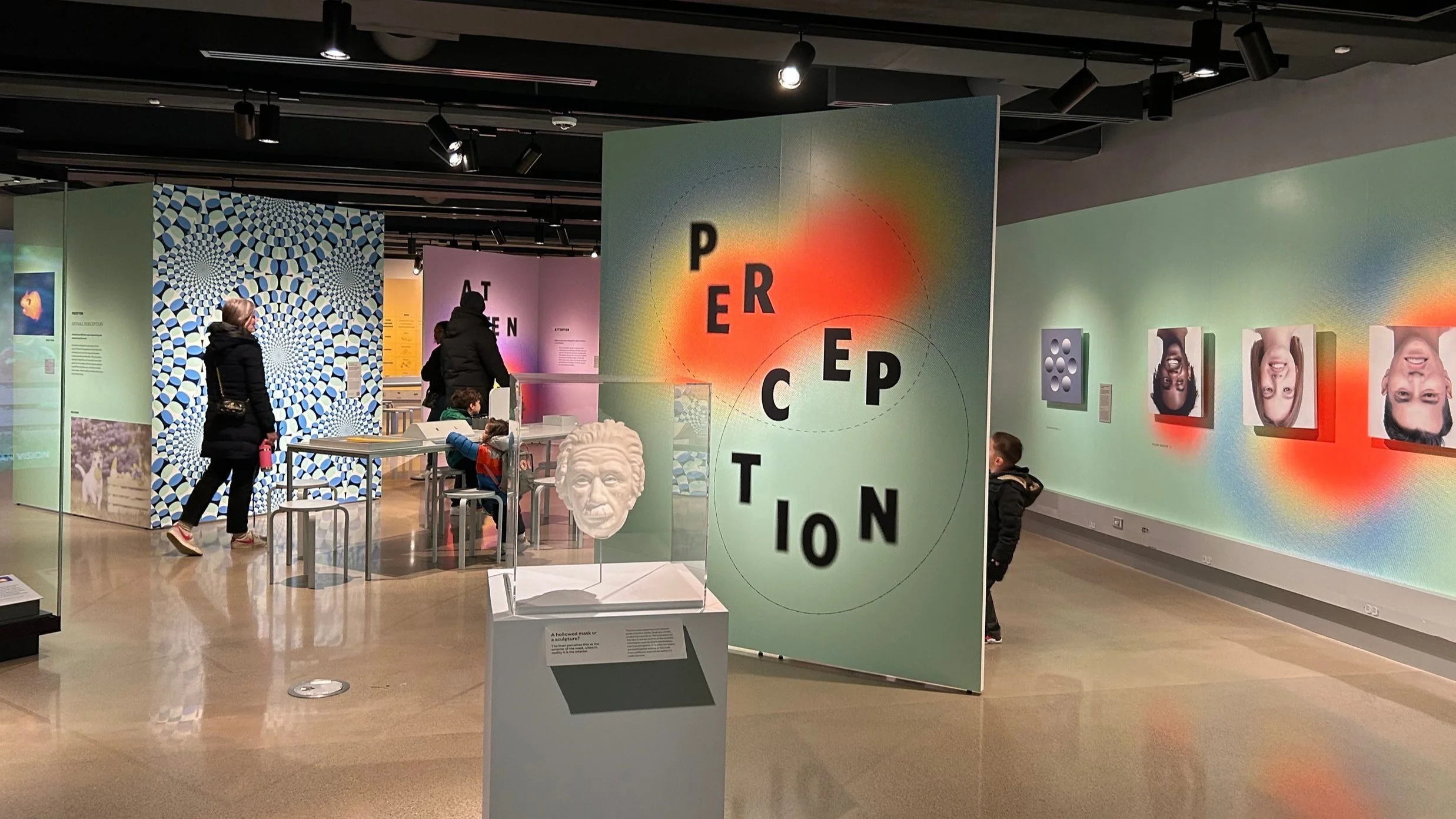
How the Brain Interprets the World Around Us
Perception is one of the most extraordinary functions of the human brain. Every sight, sound, scent, taste, texture, and sensation experienced throughout daily life begins as physical information collected by the sensory organs before being transformed into meaningful experiences by the nervous system. Although perception often appears effortless, it is the result of billions of neurons communicating through highly organized networks that continuously analyze, compare, prioritize, and interpret enormous amounts of incoming information. Modern neuroscience has demonstrated that perception is not a passive recording of reality but an active biological process through which the brain constructs an internal representation of the surrounding world.
Scientific research has revealed that perception involves far more than the individual senses alone. Attention, memory, previous experiences, emotional state, learning, and expectations all contribute to how information is interpreted. As a result, two individuals may perceive the same environment differently because their brains integrate sensory information according to unique biological and cognitive processes. Understanding these mechanisms has become one of the most important objectives in neuroscience, cognitive psychology, and computational biology, providing valuable insight into how the human brain transforms external stimuli into conscious awareness.
The Journey From Sensation to Understanding
Every perceptual experience begins when specialized sensory receptors detect changes in the external environment. Light stimulates photoreceptors within the eyes, sound waves activate delicate structures in the inner ear, chemical molecules interact with receptors responsible for smell and taste, while mechanical pressure and temperature are detected through receptors distributed throughout the skin. These receptors convert physical energy into electrical impulses that travel through complex neural pathways toward specialized regions of the brain for further processing.
The brain does not simply receive these signals as isolated pieces of information. Instead, multiple regions work together to organize, compare, and integrate sensory input into a unified experience. Visual information is combined with memory, auditory signals are interpreted alongside attention, and tactile sensations are evaluated within broader environmental contexts. This remarkable level of coordination allows the nervous system to recognize familiar faces, interpret language, identify objects, navigate environments, and respond rapidly to changing conditions while maintaining an accurate understanding of the surrounding world.
Neural Networks Behind Human Perception
Contemporary neuroscience increasingly recognizes that perception emerges through cooperation between large scale neural networks rather than isolated brain regions. Vision, hearing, touch, language, attention, and memory operate as interconnected systems that exchange information continuously. This network based organization enables the brain to process multiple streams of sensory information simultaneously while adapting to changing environments with extraordinary speed and efficiency.
Advanced neuroimaging technologies have provided compelling evidence supporting this systems based perspective. Functional Magnetic Resonance Imaging, Electroencephalography, Magnetoencephalography, and other sophisticated research techniques allow scientists to observe communication between distributed brain regions during perceptual tasks. These investigations have revealed that perception depends upon dynamic interactions involving numerous cortical and subcortical structures, illustrating the remarkable complexity of neural communication within the human brain.
The Brain as a Predictive System
One of the most influential ideas in contemporary neuroscience is that the brain functions as a predictive organ rather than simply reacting to incoming sensory information. According to predictive processing models, the brain continuously generates expectations based on previous experiences and compares those predictions with new sensory input arriving from the environment. When differences arise, neural networks rapidly update their internal models to improve future predictions and maintain an accurate representation of reality.
This predictive framework helps explain why perception is both highly efficient and remarkably adaptable. Instead of analyzing every detail from the beginning each time new information is received, the brain builds upon existing knowledge while continuously refining its interpretations. Researchers continue investigating how predictive processing contributes to learning, decision making, attention, language, and conscious awareness, making it one of the fastest growing areas within cognitive neuroscience.
Technology Revealing Hidden Processes
The study of perception has advanced dramatically through improvements in scientific technology. High resolution neuroimaging, computational neuroscience, artificial intelligence, and machine learning now enable researchers to investigate neural communication with a level of detail unimaginable only a generation ago. These technologies generate detailed maps of functional connectivity, allowing scientists to observe how information flows across the brain during complex perceptual tasks while identifying subtle relationships between different neural systems.
Computational models have become equally important because they provide theoretical frameworks capable of simulating perception under controlled conditions. By combining experimental data with advanced computer modeling, researchers can test competing hypotheses, evaluate neural mechanisms, and refine scientific theories that explain how perception emerges from biological activity. This integration of experimental neuroscience and computational science continues accelerating discovery while improving understanding of the human brain.
Perception at the Center of Brain Research
The neuroscience of perception extends far beyond understanding how the senses function. It addresses fundamental questions concerning how the brain creates conscious experience, organizes knowledge, adapts to changing environments, and transforms physical information into meaningful understanding. Every scientific advance contributes to a broader picture of how perception connects with memory, learning, language, emotion, and decision making, illustrating the remarkable coordination required for even the simplest everyday experiences.
As neuroscience continues to evolve, perception will remain one of the most important areas of scientific investigation. Emerging technologies, interdisciplinary collaboration, and increasingly sophisticated analytical methods promise to reveal new insights into the biological foundations of awareness and cognition. Through this continuing research, scientists move steadily closer to understanding one of the most extraordinary achievements of human biology: the brain’s ability to transform sensory information into the rich, dynamic, and deeply personal experience of perceiving the world.