Understanding the Science Behind One of Nature’s Most Studied Phenethylamines
Mescaline is one of the oldest scientifically documented naturally occurring compounds within the field of natural product chemistry. Unlike tryptamines such as psilocybin and DMT, mescaline belongs to an entirely different chemical family known as the phenethylamines, making it an important subject for understanding how structurally distinct molecules are classified and investigated in modern science. Produced naturally by several cactus species native to the Americas, mescaline has attracted sustained attention from botanists, chemists, pharmacologists, neuroscientists, evolutionary biologists, and ethnobotanists seeking to understand not only its molecular structure but also the remarkable biological systems responsible for its production.
The scientific significance of mescaline extends far beyond a single botanical source or chemical formula. It provides researchers with a valuable opportunity to investigate plant metabolism, molecular evolution, desert ecology, natural product biosynthesis, and receptor pharmacology within a unified scientific framework. Through decades of interdisciplinary research, mescaline has become one of the most thoroughly characterized naturally occurring phenethylamines, contributing valuable knowledge to multiple branches of biological and chemical science.
The Chemical Identity of Mescaline
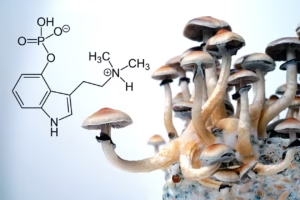
From a chemical standpoint, mescaline is classified as a phenethylamine alkaloid, a family of organic molecules built around a phenethylamine backbone. This structural framework differs fundamentally from the indole based architecture found in tryptamines, illustrating how modern chemistry organizes naturally occurring compounds according to molecular composition rather than their biological source alone. Understanding these structural differences is essential because chemical classification forms the basis of scientific communication across medicinal chemistry, pharmacology, and molecular biology.
Mescaline is synthesized through a carefully regulated sequence of enzymatic reactions that begins with naturally occurring amino acid precursors inside living plant cells. During this process, specialized enzymes modify simple biological molecules into increasingly complex chemical structures through highly coordinated metabolic pathways. Researchers continue studying these biosynthetic mechanisms to understand how evolution has enabled plants to generate such remarkable chemical diversity through millions of years of adaptation.
Where Mescaline Occurs in Nature
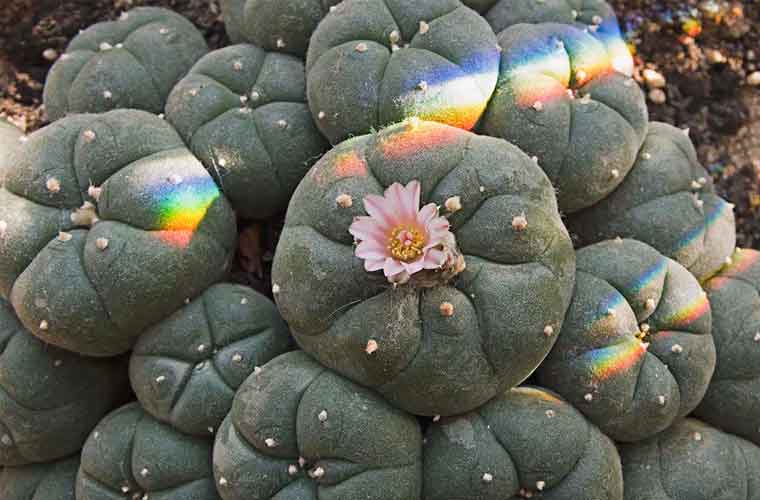
Mescaline is naturally produced by a relatively small group of cactus species belonging primarily to the Cactaceae family. Among the most extensively studied are Lophophora williamsii, Echinopsis pachanoi, Echinopsis peruviana, and Echinopsis lageniformis. Although these species differ considerably in appearance, growth rate, habitat, and evolutionary history, they share the remarkable biological ability to synthesize mescaline through related metabolic processes.
These cacti inhabit diverse environments that include arid deserts, semi arid plateaus, mountainous valleys, and subtropical landscapes across North and South America. Their ecological success reflects millions of years of adaptation to extreme climates characterized by intense sunlight, limited rainfall, nutrient poor soils, and significant temperature fluctuations. Botanists investigate these environmental relationships to understand how ecological pressures have influenced both plant evolution and the development of specialized biochemical pathways that distinguish these species from other members of the cactus family.
Plant Biochemistry and Biosynthesis
One of the most fascinating aspects of mescaline research is the study of its biosynthesis within living plants. Unlike synthetic compounds created through laboratory chemistry, mescaline is assembled through intricate biological processes directed by genes, enzymes, and cellular metabolism. Every stage of its production is carefully regulated by the plant, demonstrating the extraordinary sophistication of biochemical systems that have evolved naturally over geological timescales.
Advances in molecular biology, metabolomics, and plant genetics have greatly expanded scientific understanding of these pathways. Researchers now investigate the genes responsible for enzyme production, the regulation of metabolic networks, and the influence of environmental conditions on secondary metabolite synthesis. These discoveries contribute not only to natural product chemistry but also to broader fields such as plant physiology, evolutionary biology, systems biology, and molecular genetics.
Mescaline in Contemporary Scientific Research
Modern research investigates mescaline through an increasingly interdisciplinary lens that combines chemistry, botany, neuroscience, pharmacology, ecology, computational biology, and structural biology. Analytical chemists employ sophisticated techniques such as High Performance Liquid Chromatography, Liquid Chromatography Mass Spectrometry, Nuclear Magnetic Resonance spectroscopy, and high resolution crystallography to characterize its molecular structure with exceptional precision. At the same time, neuroscientists use advanced imaging technologies and computational models to explore receptor biology, neural communication, and molecular signaling within complex biological systems.
The integration of artificial intelligence has further accelerated scientific discovery by enabling researchers to analyze vast datasets, predict molecular interactions, and construct highly detailed computational models of biological processes. These innovations continue improving the accuracy, reproducibility, and efficiency of interdisciplinary research while strengthening collaboration among laboratories worldwide.
Why Mescaline Remains Scientifically Important
Mescaline occupies a unique position within modern science because it connects several major disciplines into a single area of investigation. Its study enhances understanding of desert plant ecology, evolutionary adaptation, molecular genetics, medicinal chemistry, natural product biosynthesis, pharmacology, and neuroscience. Few naturally occurring compounds illustrate so clearly how chemistry, biology, and evolution converge to produce the remarkable diversity observed throughout the natural world.
As scientific technology continues advancing, researchers are expected to uncover even deeper insights into the genetics, metabolism, ecological significance, and evolutionary history of mescaline producing plants. These discoveries will continue expanding our understanding of plant biology while reinforcing the importance of interdisciplinary research in revealing the extraordinary complexity of Earth’s living systems.