Psychedelic mushrooms represent a remarkably diverse group of fungi that have evolved across forests, grasslands, tropical regions, and temperate ecosystems throughout the world. While they are often discussed collectively, these mushrooms comprise numerous species with distinct evolutionary histories, ecological roles, physical characteristics, and chemical profiles. Understanding this diversity is fundamental to mycology, the scientific study of fungi, and provides valuable insight into how these organisms have adapted to different environments over millions of years.
Modern research continues to uncover new species and refine fungal classification through advances in genetics, molecular biology, and ecological science. As scientists learn more about the evolutionary relationships between these organisms, psychedelic mushrooms have become increasingly important for understanding biodiversity, fungal ecology, and the remarkable chemistry produced by nature.
A Kingdom Unlike Any Other
Fungi belong to their own biological kingdom, separate from plants, animals, and bacteria. Unlike plants, fungi do not produce energy through photosynthesis. Instead, they obtain nutrients by breaking down organic matter and recycling essential elements within ecosystems. This ecological role makes mushrooms indispensable to forest health, soil fertility, and global nutrient cycling, highlighting their importance far beyond their chemical composition.
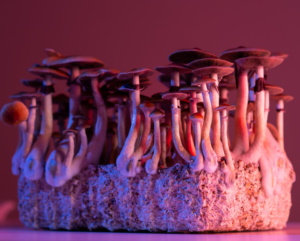
The visible mushroom is only a small reproductive structure. Beneath the surface lies an extensive network of microscopic filaments known as mycelium, which can spread across vast areas of soil, wood, or leaf litter. Scientists often describe mycelium as the functional body of the fungus, responsible for nutrient absorption, environmental interaction, and communication with surrounding organisms.
The Psilocybe Genus and Beyond
Although the genus Psilocybe contains many of the best-known psychedelic mushroom species, it represents only part of a much broader group of fungi capable of producing psilocybin. Researchers have identified additional species within genera such as Panaeolus, Gymnopilus, Pluteus, and Copelandia, each contributing unique characteristics to the study of fungal diversity and natural product chemistry.
Taxonomic classification continues to evolve as DNA sequencing provides increasingly detailed information about fungal relationships. Molecular techniques have reshaped how scientists classify species, revealing evolutionary connections that were previously impossible to identify using physical characteristics alone. This work has transformed modern mycology into one of the fastest advancing fields within biological science.
Species Found Around the World
Psychedelic mushroom species occur across an extraordinary range of climates and habitats. Tropical forests support species adapted to warm, humid conditions, while temperate grasslands and woodland ecosystems host fungi that thrive in cooler seasonal environments. Each species has evolved to occupy a specific ecological niche, influenced by climate, soil composition, altitude, vegetation, and interactions with other organisms.
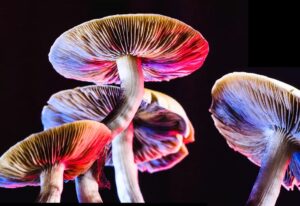
Among the most extensively documented species are Psilocybe cubensis, Psilocybe semilanceata, Psilocybe azurescens, Psilocybe cyanescens, Psilocybe mexicana, and Psilocybe tampanensis. These species differ in morphology, geographical distribution, reproductive strategies, and naturally occurring concentrations of psilocybin and related compounds, making each an important subject of scientific investigation.
Evolution Through Adaptation
Evolution has shaped psychedelic mushrooms through millions of years of environmental change. Scientists continue to investigate why certain fungal species developed the ability to synthesize psilocybin while closely related species did not. Although definitive answers remain under investigation, current research suggests these compounds may have evolved as part of complex ecological interactions involving insects, microorganisms, and environmental pressures.
Comparative genomic studies have revealed fascinating evolutionary patterns, including evidence that genes responsible for psilocybin production may have been transferred between unrelated fungal lineages through horizontal gene transfer. These discoveries challenge traditional evolutionary models and continue to reshape scientific understanding of fungal adaptation and genetic diversity.
The Importance of Identification
Accurate mushroom identification is one of the most important principles in mycology because many fungal species share remarkably similar physical characteristics. Even experienced researchers rely on multiple lines of evidence, including microscopic examination, DNA sequencing, spore analysis, ecological data, and detailed morphological observations when distinguishing closely related species.
This emphasis on precise identification has contributed significantly to advances in fungal taxonomy while supporting public education about mushroom biodiversity. Scientific accuracy remains essential not only for research but also for documenting new species, preserving biological collections, and improving knowledge of fungal evolution across different ecosystems.
A Living Frontier of Discovery
Despite centuries of study, fungal science continues to produce surprising discoveries. New mushroom species are described each year, genetic relationships are continually revised, and advances in molecular biology reveal increasingly sophisticated details about fungal metabolism, ecology, and evolution. Psychedelic mushrooms occupy only one branch of this immense kingdom, yet they have become among its most intensively investigated representatives.
Their diversity illustrates how much remains to be learned about fungi and the natural world. As scientific techniques continue to improve, psychedelic mushroom species will remain central to research exploring biodiversity, genetics, ecology, natural product chemistry, and the extraordinary complexity of life on Earth.