
Buy Mescaline powder Online (200mg) Our Mescaline powder (200mg) is...
Read MorePsychedelic science is a rapidly advancing field that combines neuroscience, psychology, pharmacology, psychiatry, chemistry, and molecular biology to investigate how psychedelic compounds interact with the human brain and nervous system. Rather than focusing on a single substance, this discipline examines an entire spectrum of naturally occurring and synthetic compounds to better understand consciousness, cognition, perception, emotion, and neural communication. Advances in scientific technology have transformed psychedelic research into one of the most dynamic areas of contemporary biomedical science, attracting collaboration from universities, medical institutions, and research organizations across the world.
What distinguishes psychedelic science from many other research disciplines is its multidisciplinary nature. Modern investigations combine laboratory experimentation, clinical research, computational modeling, and advanced brain imaging to examine complex biological systems from multiple perspectives. This integrated approach continues to improve scientific understanding while creating new opportunities for innovation in neuroscience and medicine.
Neuroscience and the Human Brain
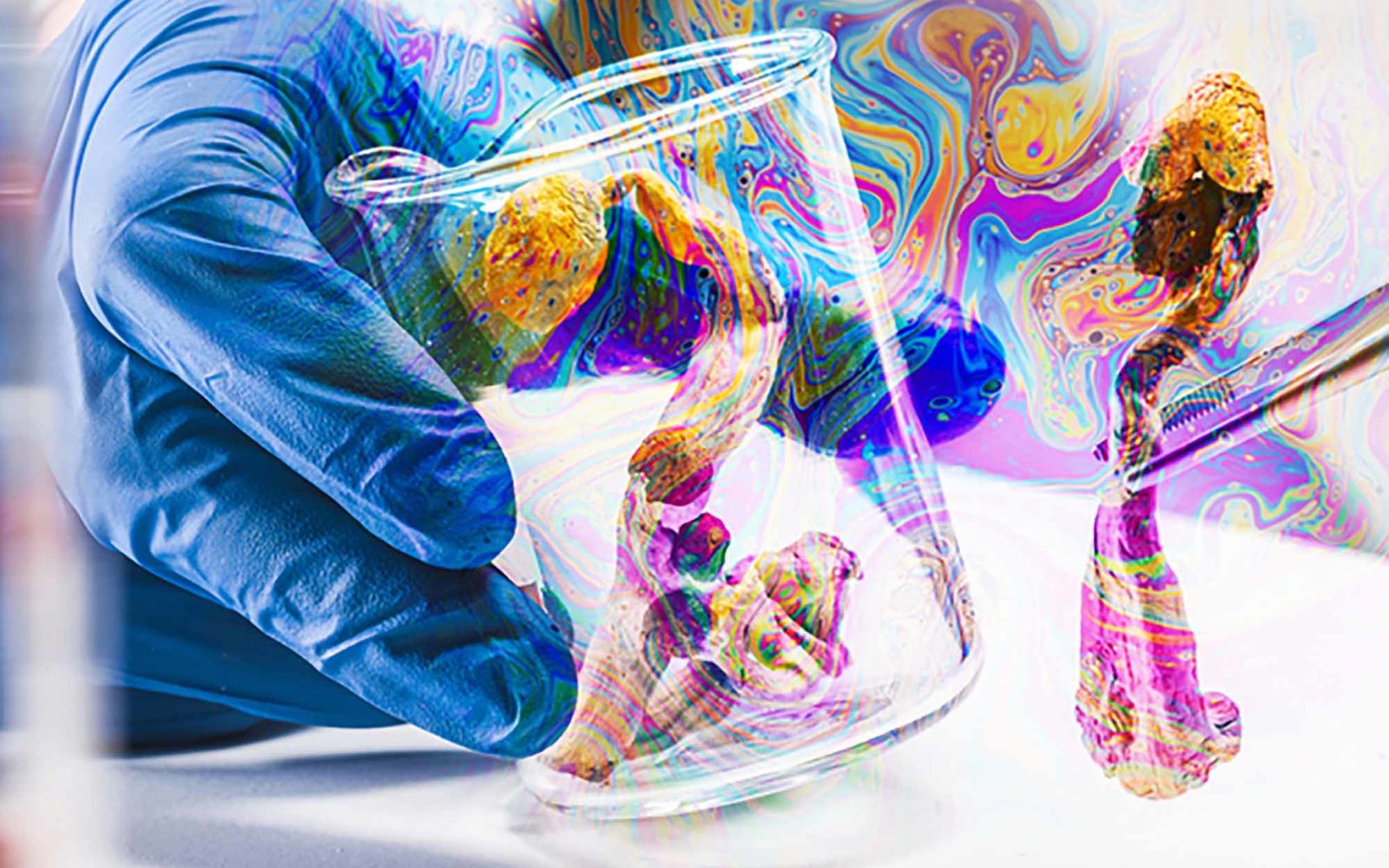
One of the central objectives of psychedelic science is understanding how the brain generates conscious experience. Researchers investigate how psychedelic compounds influence communication between neural networks responsible for perception, learning, memory, emotion, and decision making. Using advanced imaging technologies such as functional magnetic resonance imaging, magnetoencephalography, electroencephalography, and positron emission tomography, scientists are able to observe changes in brain activity with remarkable precision, providing valuable insight into the biological foundations of cognition.
These discoveries have expanded scientific understanding of neural plasticity, functional brain connectivity, and information processing. Rather than examining isolated brain regions, modern neuroscience increasingly views the brain as an interconnected network whose dynamic communication patterns influence thought, behavior, and conscious awareness. Psychedelic research continues to contribute significantly to this evolving perspective.
Pharmacology and Molecular Research

At the molecular level, psychedelic science investigates how different compounds interact with receptors, enzymes, neurotransmitters, and intracellular signaling pathways throughout the nervous system. Researchers examine receptor selectivity, metabolic processes, pharmacokinetics, and molecular structure to better understand why individual compounds produce distinct biological responses. This research forms the foundation of medicinal chemistry while supporting the development of increasingly sophisticated scientific models of brain function.
Laboratory investigations also explore the relationship between molecular structure and biological activity, allowing scientists to compare different classes of psychedelic compounds including tryptamines, phenethylamines, lysergamides, dissociatives, and atypical psychoactive molecules. These comparative studies improve understanding of receptor biology and contribute to broader advances in pharmaceutical science.
Clinical Research and Evidence Based Investigation

Modern psychedelic science places strong emphasis on carefully designed clinical research conducted according to internationally recognized ethical standards. Clinical investigations typically involve multidisciplinary teams that include physicians, psychologists, psychiatrists, neuroscientists, pharmacologists, statisticians, and research coordinators working together to evaluate scientific questions through standardized methodologies. Every stage of the research process is designed to ensure participant safety, scientific reliability, and reproducible results.
Evidence based medicine remains the guiding principle of contemporary psychedelic research. Findings are evaluated through peer review, independent replication, statistical analysis, and transparent reporting before contributing to scientific consensus. This rigorous process ensures that new discoveries are supported by high quality evidence rather than anecdotal observation or unsupported claims.
Emerging Technologies Transforming Research
Recent technological advances have dramatically expanded the capabilities of psychedelic science. Artificial intelligence, computational biology, machine learning, genomic sequencing, molecular modeling, and high resolution neuroimaging now enable researchers to investigate biological systems at levels of detail that were previously impossible. These innovations accelerate scientific discovery while improving the accuracy of laboratory analysis, receptor modeling, and data interpretation.
Researchers are also integrating large scale biological databases with computational neuroscience to identify previously unrecognized patterns within complex neurological systems. This combination of experimental science and digital technology continues to transform biomedical research, creating new opportunities for understanding the remarkable complexity of the human brain.
Global Collaboration and Scientific Progress
The rapid growth of psychedelic science reflects unprecedented collaboration among universities, hospitals, biotechnology companies, government agencies, and independent research institutions. International partnerships allow scientists to share data, establish standardized research protocols, and replicate findings across multiple laboratories, strengthening both scientific reliability and global cooperation. These collaborative efforts accelerate discovery while promoting transparency, consistency, and methodological excellence throughout the research community.
Beyond laboratory investigation, interdisciplinary collaboration also encourages dialogue between neuroscience, psychology, anthropology, ethnobotany, chemistry, and medical ethics. By integrating diverse perspectives, researchers develop a more comprehensive understanding of psychedelic compounds and their broader significance within biology, medicine, and human history.
Ethics, Responsibility, and Scientific Integrity
Scientific integrity remains the foundation of psychedelic research. Ethical oversight, participant protection, informed consent, independent review boards, and transparent reporting are essential components of every credible investigation. Researchers recognize that responsible science requires rigorous methodology, objective interpretation of evidence, and continuous evaluation through peer reviewed publication and independent verification.
Equally important is the recognition of cultural heritage and traditional knowledge that has informed modern scientific inquiry. Contemporary researchers increasingly acknowledge the historical contributions of Indigenous communities while promoting ethical collaboration, cultural respect, environmental stewardship, and responsible scientific communication that benefits both science and society.
The Future of Psychedelic Science
Psychedelic science continues to evolve as one of the most exciting frontiers in modern biomedical research. Ongoing advances in neuroscience, pharmacology, psychology, medicinal chemistry, artificial intelligence, and molecular biology are expanding scientific understanding of the brain at an unprecedented pace. Each new discovery contributes to a deeper appreciation of how complex biological systems influence perception, cognition, emotion, and consciousness.
As research continues to mature, psychedelic science is expected to remain a major area of interdisciplinary investigation, bringing together experts from diverse scientific fields to address some of the most fundamental questions about the human mind. Through rigorous research, ethical responsibility, and international collaboration, this field continues to shape the future of neuroscience while expanding our understanding of one of nature’s most complex and fascinating biological systems.

Buy Fryd chocolate bars 1000mg
Buy Fryd chocolate bars 1000mg Fryd chocolate bars are the...
Read More
Buy Creature Magic Mushrooms Online
Buy Creature Magic Mushrooms Online Dive into the extraordinary world...
Read More
hawaiian magic mushrooms Online
hawaiian magic mushrooms Online Renowned for their potency and quality,...
Read MoreThe Science Behind Psychedelics
The Science Behind Psychedelics Uncover the biological mechanisms that make...
Read More
Mescaline And Cacti
Mescaline & Cacti Discover the remarkable history, botanical diversity, and...
Read More
The Chemistry Behind Psychedelic Compounds
Chemistry at the Core of Psychedelic Science Every psychedelic compound...
Read More
Serotonin Receptors Explained
Understanding the Brain’s Chemical Communication Network The human brain depends...
Read More
Understanding Peer Review
Why Peer Review Is the Foundation of Scientific Credibility Scientific...
Read More
Evolution of Psychoactive Plants and Fungi
Millions of Years of Evolution Shaping Nature’s Chemical Diversity The...
Read More