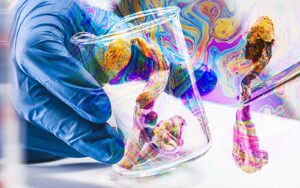
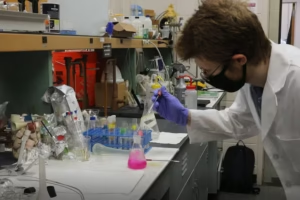
The future of psychedelic research is being shaped by one of the most significant periods of scientific advancement in modern neuroscience. Unlike previous decades, when investigations were often limited by technology and fragmented research efforts, today’s scientists have access to sophisticated analytical tools capable of exploring the brain with extraordinary precision. Advances in molecular biology, neuroimaging, artificial intelligence, computational neuroscience, and medicinal chemistry are allowing researchers to investigate questions that were once considered impossible to answer. This technological transformation has accelerated scientific discovery while opening entirely new avenues for understanding the biology of perception, cognition, and consciousness.
What makes the current era particularly remarkable is the integration of multiple scientific disciplines working toward common objectives. Rather than relying on isolated investigations, research institutions now combine expertise from neuroscience, psychology, pharmacology, molecular genetics, chemistry, and computational biology to produce a more comprehensive understanding of the human nervous system. This collaborative model is expected to remain one of the defining characteristics of psychedelic science throughout the coming decades.
Innovation Beyond the Laboratory
Modern psychedelic research extends far beyond the study of individual compounds. Scientists are increasingly interested in understanding the biological systems that regulate learning, memory, emotional processing, neural communication, and cognitive adaptability. By investigating these fundamental mechanisms, researchers are developing broader scientific models that contribute not only to psychedelic science but also to neuroscience, psychiatry, molecular medicine, and behavioral biology. Every discovery adds another layer to our understanding of how the brain functions as an interconnected biological network.
Emerging technologies continue to accelerate this progress. Artificial intelligence assists researchers in identifying complex biological patterns, while advanced computational models help predict molecular interactions before laboratory experiments begin. High resolution imaging, genomic sequencing, and automated data analysis have dramatically improved the speed and precision with which scientists can investigate neurological processes. These innovations are transforming scientific methodology while improving the quality and reproducibility of research findings.
Precision Medicine and Personalized Research
One of the most promising directions in biomedical science is the movement toward precision medicine, an approach that recognizes that every individual possesses unique genetic, physiological, and environmental characteristics. Rather than applying identical research models to all participants, scientists increasingly investigate how biological differences influence pharmacology, metabolism, neural activity, and cognitive function. This personalized perspective has the potential to improve scientific understanding while supporting more accurate and individualized research methodologies.
Researchers are also examining biomarkers, genetic variation, protein expression, and metabolic pathways to better understand why individuals may respond differently under controlled research conditions. These investigations represent an important step toward integrating psychedelic science with the broader evolution of personalized healthcare and molecular medicine.
Global Collaboration Driving Discovery
Scientific progress has become increasingly international. Universities, hospitals, biotechnology companies, government agencies, and independent research organizations now collaborate across continents, sharing expertise, methodologies, and research findings that strengthen scientific reliability. These partnerships allow studies to be replicated across diverse populations, improving confidence in scientific conclusions while encouraging greater transparency throughout the research process.
International collaboration also promotes the development of standardized research protocols, ethical guidelines, and data sharing initiatives that benefit the global scientific community. By combining resources and knowledge from multiple disciplines and institutions, researchers can address increasingly complex questions while accelerating the pace of discovery. This cooperative approach continues to establish psychedelic science as one of the most interconnected areas of contemporary biomedical research.
Technology Reshaping Scientific Discovery
The next generation of scientific breakthroughs will likely be driven by technologies that continue to evolve at an unprecedented rate. Artificial intelligence, quantum computing, advanced molecular simulation, high throughput chemical screening, and machine learning are already changing how researchers design experiments and interpret biological data. These tools enable scientists to analyze enormous datasets with greater accuracy, revealing patterns that would be difficult or impossible to identify through traditional analytical methods alone.
Future investigations are also expected to integrate digital neuroscience with molecular biology, allowing researchers to construct increasingly sophisticated models of neural communication and brain organization. As these technologies mature, they will provide deeper insight into the biological mechanisms that influence cognition, perception, and consciousness while expanding the scientific foundation upon which future discoveries are built.
The Importance of Responsible Progress
Scientific advancement carries an equally important responsibility to maintain ethical integrity, transparency, and public trust. Researchers recognize that innovation must always be guided by rigorous methodology, independent oversight, and evidence based interpretation. Careful peer review, reproducibility, participant protection, and regulatory compliance remain essential components of credible scientific investigation, ensuring that discoveries contribute meaningfully to biomedical knowledge while protecting the welfare of research participants.
Responsible progress also includes collaboration with historians, anthropologists, ethicists, and Indigenous communities whose knowledge has contributed to the historical understanding of many natural psychoactive organisms. Recognizing these diverse perspectives strengthens scientific inquiry while promoting a more inclusive and respectful approach to future research.
Looking Toward Tomorrow
The future of psychedelic research extends well beyond the discovery of new compounds. It represents an expanding scientific effort to understand one of the most complex biological systems ever studied: the human brain. As technology, international collaboration, and interdisciplinary research continue to advance together, scientists are gaining unprecedented opportunities to explore the intricate relationships between chemistry, biology, cognition, and consciousness.
Although many questions remain unanswered, the pace of modern discovery suggests that the coming decades will produce significant advances across neuroscience, pharmacology, molecular biology, psychology, and computational science. Through careful investigation, ethical responsibility, and global collaboration, psychedelic research will continue to contribute to a deeper understanding of the human mind while shaping the future of biomedical science.