Psychedelics represent one of the most fascinating and interdisciplinary fields of scientific study, bringing together discoveries from neuroscience, pharmacology, chemistry, psychology, mycology, botany, anthropology, and molecular biology. Although often discussed as a single group, psychedelics comprise a diverse collection of naturally occurring and synthetic compounds with distinct chemical structures, biological origins, pharmacological properties, and historical backgrounds. Modern research seeks not only to understand how these compounds interact with the human nervous system but also what they reveal about brain function, perception, cognition, consciousness, and the remarkable complexity of human biology.
Interest in psychedelic science has expanded considerably over recent decades as advances in analytical chemistry, neuroimaging, genetics, and computational biology have provided researchers with new tools for investigating the brain. Universities, research institutes, and scientific organizations across the world continue to explore these compounds through carefully designed studies that contribute to a broader understanding of neuroscience and human physiology. At the same time, historians, anthropologists, and ethnobotanists continue to examine the cultural traditions and historical knowledge that have shaped humanity’s relationship with psychoactive plants and fungi across different civilizations.
Unlike many scientific disciplines that focus on a single subject, psychedelic science draws knowledge from numerous areas of research. Understanding these compounds requires an appreciation of their chemistry, natural history, ecological origins, receptor biology, evolutionary development, and cultural significance. Together, these perspectives provide a balanced and comprehensive view of a field that continues to evolve through responsible scientific inquiry and international collaboration.
The Major Categories of Psychedelic Science
Psychedelic compounds can be organized into several broad scientific categories based on their chemistry, biological origin, pharmacological characteristics, and historical significance. Each category represents a unique area of scientific investigation and contributes to a broader understanding of how naturally occurring and synthetic compounds interact with biological systems. Our educational library explores each of these subjects in detail, allowing readers to build knowledge progressively while appreciating the diversity of psychedelic research.
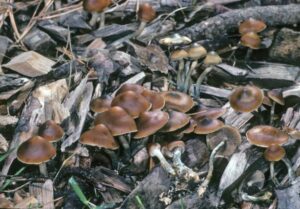
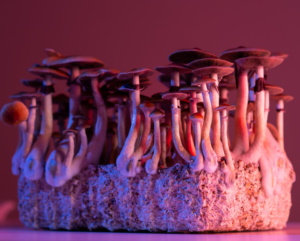
Explore the biology, taxonomy, ecology, chemistry, and scientific research surrounding naturally occurring psilocybin producing fungi, one of the most extensively studied groups within psychedelic science.
Discover the history, chemistry, pharmacology, and scientific importance of lysergamide compounds, including their role in advancing modern neuroscience and receptor biology.
Learn about dimethyltryptamine, botanical sources associated with traditional preparations, ethnobotanical history, and the scientific investigation of naturally occurring tryptamines.
Examine the cactus species that naturally produce mescaline while exploring their botanical characteristics, chemistry, cultural history, and continuing scientific interest.
Understand the botanical origins of Tabernanthe iboga, the chemistry of ibogaine, and the historical, ecological, and scientific perspectives surrounding this unique plant.
Explore the distinctive pharmacology, botanical classification, and scientific research associated with one of the most unusual psychoactive plants studied by modern researchers.
Learn about Amanita mushroom species, their taxonomy, ecology, chemistry, and historical significance within mycology and natural product research.
Examine the scientific classification of empathogens, their neurochemical mechanisms, and their place within contemporary pharmacological and psychological research.
Discover the compounds that primarily influence glutamatergic pathways and how researchers study their distinctive pharmacological characteristics within neuroscience.
Explore experimental compounds that continue to expand scientific understanding through laboratory investigation, medicinal chemistry, and receptor biology.
Gain a broader appreciation for the remarkable diversity of naturally occurring psychoactive plants studied across ethnobotany, ecology, evolutionary biology, and natural product chemistry.
Understand the interdisciplinary field that connects chemistry, neuroscience, psychology, pharmacology, anthropology, molecular biology, and clinical research into one rapidly developing area of scientific investigation.
The Scientific Foundations of Psychedelic Research
Modern psychedelic research extends far beyond the study of individual compounds. Scientists investigate how molecules interact with neurotransmitter systems, influence receptor signaling, and contribute to communication across complex neural networks. Advances in functional brain imaging, molecular pharmacology, medicinal chemistry, computational neuroscience, and systems biology have transformed the field into one of the most dynamic areas of contemporary biomedical research. Rather than focusing exclusively on individual substances, researchers increasingly seek to understand the broader biological principles that govern perception, cognition, learning, memory, and conscious awareness.
The scientific process also emphasizes transparency, reproducibility, ethical oversight, and careful interpretation of evidence. Every meaningful advance is supported by rigorous methodology, peer review, and collaboration across disciplines. This commitment to evidence based investigation ensures that knowledge continues to develop through measurable scientific observation rather than speculation.
A Field Connected by Many Disciplines
The study of psychedelics cannot be fully understood through a single scientific discipline. Mycology examines fungi that naturally produce psychoactive compounds, botany explores the diversity of plants, chemistry explains molecular structure, pharmacology investigates biological interactions, neuroscience studies brain function, anthropology provides historical context, and psychology examines human cognition and behavior. Together, these fields contribute to a richer understanding of one of the most interdisciplinary subjects in modern science.
This educational resource has been developed to introduce readers to each of these perspectives while encouraging further exploration through dedicated articles and category guides. By connecting historical knowledge with contemporary scientific research, the website provides a structured pathway for learning that reflects the complexity, diversity, and continuing evolution of psychedelic science.