Understanding the Plants Behind One of the World’s Most Studied Botanical Traditions
Among the many botanical subjects explored in ethnobotany, few have attracted as much scientific attention as the plants traditionally associated with ayahuasca. Rather than representing a single plant species, ayahuasca refers to a traditional Amazonian botanical preparation that combines specific rainforest plants, each contributing its own biological and chemical characteristics. This distinction is important because the scientific study of ayahuasca begins not with chemistry alone, but with botany, ecology, plant evolution, and the extraordinary biodiversity of the Amazon rainforest. Understanding the botanical origins of these plants provides valuable insight into one of the most biologically diverse ecosystems on Earth while highlighting the intricate relationships that exist between plants, environments, and human knowledge.
Modern research examines these botanical species from multiple scientific perspectives. Botanists investigate their taxonomy and evolutionary relationships, ecologists study the environments in which they naturally grow, chemists analyze their complex natural compounds, while ethnobotanists explore the historical relationships between Indigenous communities and rainforest biodiversity. Together, these disciplines create a comprehensive understanding that extends well beyond individual plant species and illustrates the remarkable complexity of tropical ecosystems.
The Plant Species Traditionally Associated With Ayahuasca
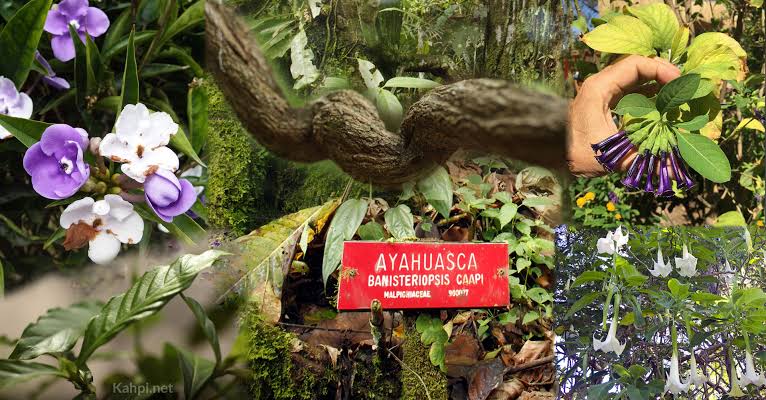
Scientific literature commonly identifies Banisteriopsis caapi, a woody climbing vine belonging to the family Malpighiaceae, as the primary botanical species associated with traditional ayahuasca preparations. Researchers also study Psychotria viridis, a flowering shrub within the coffee family Rubiaceae, because of its historical association with the vine in many Amazonian traditions. In some regions, additional native plant species have also been documented within local ethnobotanical practices, reflecting the extraordinary cultural and botanical diversity that exists across the Amazon Basin.
Each of these plants possesses distinct biological characteristics shaped by millions of years of evolution. Differences in leaf morphology, reproductive structures, growth patterns, habitat preferences, and biochemical composition have made them important subjects within tropical botany and natural product chemistry. Their continued study contributes to broader scientific understanding of rainforest biodiversity while demonstrating the remarkable diversity found within tropical plant communities.
The Amazon Rainforest as a Living Laboratory
The Amazon rainforest is widely recognized as one of the most biologically diverse ecosystems on Earth. Covering millions of square kilometers across South America, it contains an extraordinary concentration of plant, fungal, microbial, and animal species that continue to challenge scientific understanding. Many botanical species remain incompletely documented, while new discoveries are regularly reported through advances in taxonomy, molecular biology, and environmental research.
Within this complex environment, plants interact continuously with soil microorganisms, insects, fungi, birds, mammals, and climatic conditions that shape their growth and evolution. Researchers investigate these ecological relationships to better understand how tropical ecosystems maintain biodiversity and how individual plant species contribute to broader environmental stability. The study of rainforest ecology has therefore become inseparable from the scientific investigation of many ethnobotanical species.
Ethnobotany and Traditional Knowledge
Ethnobotany examines the relationships that have developed between human societies and plants throughout history. In the Amazon, Indigenous communities have accumulated extensive botanical knowledge over countless generations through careful observation of local ecosystems and the plants that inhabit them. This traditional ecological knowledge has become an important area of academic research because it provides valuable historical perspectives on biodiversity, plant classification, and ecological relationships.
Contemporary ethnobotanical research emphasizes respectful collaboration with Indigenous communities while recognizing their longstanding contributions to botanical science. Researchers increasingly acknowledge that traditional ecological knowledge and modern scientific investigation complement one another, providing broader insight into rainforest biodiversity than either approach could achieve independently. This collaborative perspective has strengthened both conservation biology and ethnobotanical research across tropical regions.
Modern Botanical and Chemical Research
Advances in plant science have transformed the study of rainforest species associated with ayahuasca. High resolution microscopy, DNA sequencing, metabolomics, analytical chemistry, and molecular biology enable scientists to investigate plant physiology, genetics, biochemical pathways, and evolutionary relationships with unprecedented detail. These technologies have improved species classification while revealing increasingly sophisticated biological processes involved in plant growth, adaptation, and natural compound synthesis.
Researchers also investigate how environmental factors influence plant biology. Soil composition, rainfall patterns, sunlight, altitude, seasonal variation, microbial communities, and climate all contribute to plant development and biochemical diversity. Understanding these interactions remains an important objective within ecology because it demonstrates how tropical biodiversity emerges through the continuous interaction between organisms and their environments.
Preserving Biodiversity for Future Research
The remarkable botanical diversity of the Amazon continues to inspire scientific investigation across botany, ecology, chemistry, conservation biology, and environmental science. Every newly documented plant species, ecological interaction, or genetic discovery contributes to a more complete understanding of one of the world’s most important ecosystems. Protecting these environments therefore supports not only biodiversity conservation but also future scientific discovery.
As research technologies continue advancing, scientists are expected to uncover new information about tropical plant evolution, ecological adaptation, and the remarkable biological complexity of rainforest ecosystems. The botanical origins of ayahuasca illustrate how a single area of study can connect multiple scientific disciplines while highlighting the importance of preserving natural environments that continue to expand humanity’s understanding of the living world.