A New Era of Scientific Exploration and International Collaboration
The twenty first century has witnessed an extraordinary resurgence of scientific interest in psychedelic research, often described by researchers as the Modern Renaissance of Psychedelic Science. Unlike earlier periods that were primarily defined by individual discoveries or isolated laboratory investigations, this contemporary era is characterized by large scale international collaboration, advanced scientific technologies, interdisciplinary research, and increasingly sophisticated methods of studying the human brain. Universities, research institutes, hospitals, pharmaceutical laboratories, and neuroscience centers across the world are contributing to a rapidly expanding body of scientific literature that explores the biology, chemistry, pharmacology, neuroscience, and natural history of psychedelic compounds. This renewed momentum reflects not simply increased research activity but a broader transformation in how modern science investigates complex biological systems.
Today’s scientific landscape differs significantly from that of previous generations. Researchers now have access to technologies capable of observing neural communication, molecular interactions, genetic expression, and biochemical pathways with extraordinary precision. Combined with advances in computational science, artificial intelligence, structural biology, and analytical chemistry, these innovations have created unprecedented opportunities to investigate questions that were once beyond the reach of scientific investigation. The result is a dynamic and rapidly evolving field that continues to strengthen understanding across numerous scientific disciplines.
The Rise of Interdisciplinary Research
One of the defining characteristics of the modern renaissance is the integration of multiple scientific disciplines into a single collaborative framework. Contemporary psychedelic research no longer exists within the boundaries of chemistry or pharmacology alone. Instead, it brings together neuroscientists, molecular biologists, chemists, psychologists, pharmacologists, geneticists, computational scientists, physicians, botanists, mycologists, statisticians, and engineers, each contributing specialized expertise that strengthens the overall scientific process.
This interdisciplinary model has fundamentally changed how research is conducted. Rather than studying isolated biological mechanisms, investigators examine how molecular chemistry, receptor biology, neural communication, genetics, metabolism, cognition, and environmental influences interact within highly complex biological systems. This systems based approach has become one of the greatest strengths of contemporary neuroscience and continues generating increasingly comprehensive scientific knowledge.
Technology Accelerating Scientific Discovery
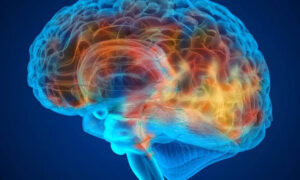
Modern scientific progress has been driven by remarkable technological innovation. Functional Magnetic Resonance Imaging, Positron Emission Tomography, Electroencephalography, Magnetoencephalography, high resolution microscopy, genomic sequencing, metabolomics, proteomics, and advanced analytical chemistry have transformed the way researchers investigate biological processes. These technologies allow scientists to observe living systems with levels of precision unimaginable only a few decades ago.
Artificial intelligence and computational biology have further accelerated discovery by enabling researchers to analyze enormous quantities of scientific data. Machine learning algorithms assist in identifying complex biological patterns, modeling neural networks, interpreting genomic information, and improving the accuracy of experimental analysis. Together, these technologies are reshaping biomedical research while expanding scientific understanding of the brain, nervous system, and molecular biology.
Global Collaboration and Scientific Transparency
Another defining feature of this modern era is the unprecedented level of international cooperation within the scientific community. Research institutions across North America, Europe, Asia, Oceania, Africa, and South America regularly collaborate through joint publications, multinational research projects, shared databases, and international scientific conferences. This global exchange of knowledge has significantly improved scientific transparency, reproducibility, and methodological consistency.
Open access publishing, digital communication platforms, international research networks, and collaborative data sharing have accelerated the pace of discovery while encouraging independent verification of scientific findings. Researchers are now able to compare results across multiple laboratories, refine experimental methodologies, and build upon previous discoveries more efficiently than at any other time in scientific history. This collaborative environment strengthens confidence in published research while supporting the continued growth of interdisciplinary science.
Education, Public Engagement, and Scientific Literacy
The modern renaissance has also increased public interest in neuroscience, natural product chemistry, mycology, botany, and the broader biological sciences. Universities, museums, scientific organizations, educational institutions, and academic publishers have expanded access to reliable educational resources that explain complex scientific concepts in ways that are accessible to wider audiences. This growing emphasis on scientific literacy encourages informed discussion while helping readers better understand the methods, principles, and evidence that underpin contemporary research.
Educational initiatives also promote critical thinking by emphasizing peer reviewed research, scientific methodology, evidence based investigation, and responsible interpretation of scientific findings. As access to high quality scientific information continues to improve, public understanding of interdisciplinary research is expected to grow alongside continued advances in neuroscience and the life sciences.
Looking Ahead to the Future of Scientific Discovery
The modern renaissance of psychedelic science is not a final destination but the beginning of a new chapter in interdisciplinary scientific exploration. Rapid advances in molecular genetics, artificial intelligence, computational neuroscience, structural biology, environmental science, and precision analytical chemistry continue opening new avenues of investigation that promise to deepen understanding of the human brain and the natural world. Every technological breakthrough provides researchers with more powerful tools to investigate increasingly complex biological questions while strengthening the quality and reliability of scientific evidence.
As global collaboration continues to expand, the future of psychedelic science will likely be defined by innovation, transparency, and interdisciplinary cooperation. The remarkable progress achieved during this modern renaissance demonstrates how curiosity, technological advancement, and international scientific partnership can transform an evolving field into one of the most dynamic areas of contemporary research. It stands as a powerful example of how science continues to advance through careful investigation, shared knowledge, and a collective commitment to expanding humanity’s understanding of biology, neuroscience, and the extraordinary complexity of life.