
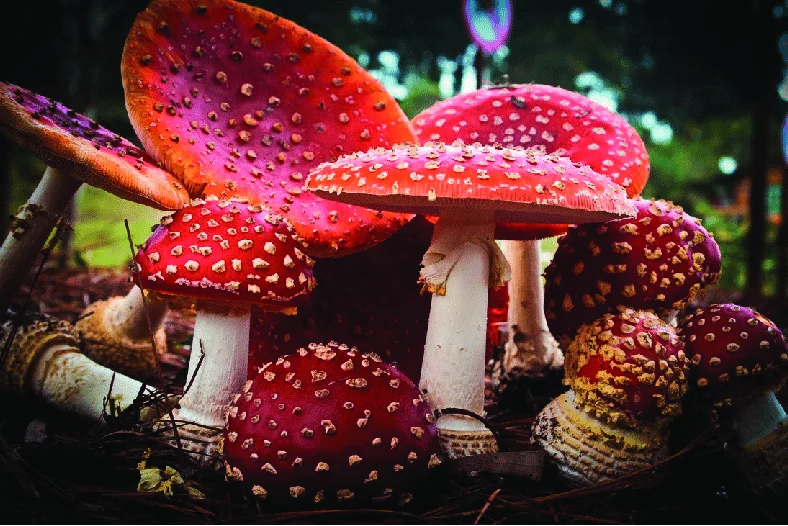
Understanding One of the World’s Most Recognizable Mushroom Genera
The genus Amanita represents one of the most recognizable and scientifically important groups of fungi in the natural world. Comprising more than 600 identified species distributed across forests on every inhabited continent, Amanita mushrooms have become a major subject of study within mycology, ecology, taxonomy, molecular biology, and environmental science. Their striking diversity in appearance, ecological function, evolutionary history, and chemical composition has fascinated researchers for generations, making the genus one of the most extensively documented groups within fungal biology.
Although certain Amanita species receive significant public attention, modern science approaches the genus from a much broader perspective. Researchers investigate how these fungi contribute to forest ecosystems, form relationships with trees, evolve through genetic adaptation, and participate in nutrient cycling within natural environments. Their importance extends far beyond individual species, providing valuable insight into fungal evolution, biodiversity, ecosystem resilience, and the remarkable complexity of life beneath the forest floor.
The Diversity of the Amanita Genus
Amanita belongs to the family Amanitaceae and includes an extraordinary range of mushroom species displaying remarkable variation in size, coloration, structure, habitat, and ecological adaptation. While some species are widely recognized because of their distinctive appearance, many others remain relatively unknown outside scientific literature despite playing equally important ecological roles within forest ecosystems.
Taxonomists continue discovering and describing new Amanita species through field research, DNA sequencing, and molecular phylogenetic analysis. These advances have significantly refined fungal classification by revealing evolutionary relationships that traditional morphological observation alone could not fully explain. As genomic technologies continue improving, scientists expect additional species to be identified, further expanding our understanding of one of the world’s most diverse fungal genera.
An Essential Partner in Forest Ecosystems
Unlike fungi that obtain nutrients by decomposing dead organic material, many Amanita species form highly specialized ecological partnerships known as ectomycorrhizal associations with the roots of trees. Through these mutually beneficial relationships, fungal mycelium surrounds tree roots and extends deep into the surrounding soil, dramatically increasing the tree’s ability to absorb water, nitrogen, phosphorus, and essential minerals. In return, the tree supplies carbohydrates produced through photosynthesis, creating a balanced exchange that benefits both organisms.
These underground fungal networks contribute significantly to forest health by improving nutrient availability, increasing drought resilience, supporting seedling development, and enhancing soil stability. Ecologists increasingly recognize ectomycorrhizal fungi as fundamental components of healthy woodland ecosystems because they connect individual trees into complex biological communities that continuously exchange nutrients and chemical signals beneath the forest floor.
The Hidden World of Mycelial Networks
The visible mushroom represents only a small reproductive structure emerging from a much larger underground organism. Beneath the soil exists an intricate network of microscopic fungal filaments known as mycelium that may extend across vast areas while interacting with countless microorganisms, plant roots, insects, and soil organisms. These living networks continuously decompose organic material, recycle nutrients, regulate soil biology, and contribute to the long term stability of forest ecosystems.
Recent advances in soil ecology and environmental microbiology have revealed that mycelial networks are considerably more complex than previously understood. Scientists now investigate how fungi communicate chemically with surrounding organisms, respond to environmental change, and influence broader ecological processes that sustain biodiversity. These discoveries continue transforming our understanding of forest ecology while demonstrating the central role fungi play in maintaining healthy terrestrial environments.
Modern Mycology and Molecular Research
The scientific investigation of Amanita mushrooms has advanced rapidly through improvements in molecular biology, environmental DNA sequencing, metabolomics, microscopy, and computational biology. Researchers can now examine fungal genetics, cellular development, biochemical pathways, and evolutionary relationships with remarkable precision, allowing increasingly accurate classification and deeper understanding of fungal biodiversity.
High resolution analytical techniques also enable scientists to investigate the complex chemistry naturally produced by Amanita species while exploring how these compounds contribute to fungal physiology and ecological adaptation. Combined with advances in genomics and structural biology, these technologies continue expanding knowledge across mycology, evolutionary biology, and environmental science while strengthening international fungal research.
Conservation and the Future of Fungal Science
The continued study of Amanita mushrooms illustrates the growing importance of fungi within modern biological research. As scientists investigate climate change, biodiversity conservation, ecosystem resilience, and sustainable forest management, fungal ecology has become increasingly central to understanding how terrestrial ecosystems function. Protecting fungal diversity is now recognized as an essential component of preserving healthy forests because fungi support countless ecological processes that influence plant communities, wildlife populations, and global nutrient cycles.
Future research is expected to combine artificial intelligence, genomic sequencing, remote environmental monitoring, metabolomics, and computational ecology to investigate fungal biology at unprecedented levels of detail. Every new discovery contributes to a broader appreciation of the extraordinary diversity contained within the Amanita genus while reinforcing the importance of fungi as indispensable partners in the natural systems that sustain life on Earth.