
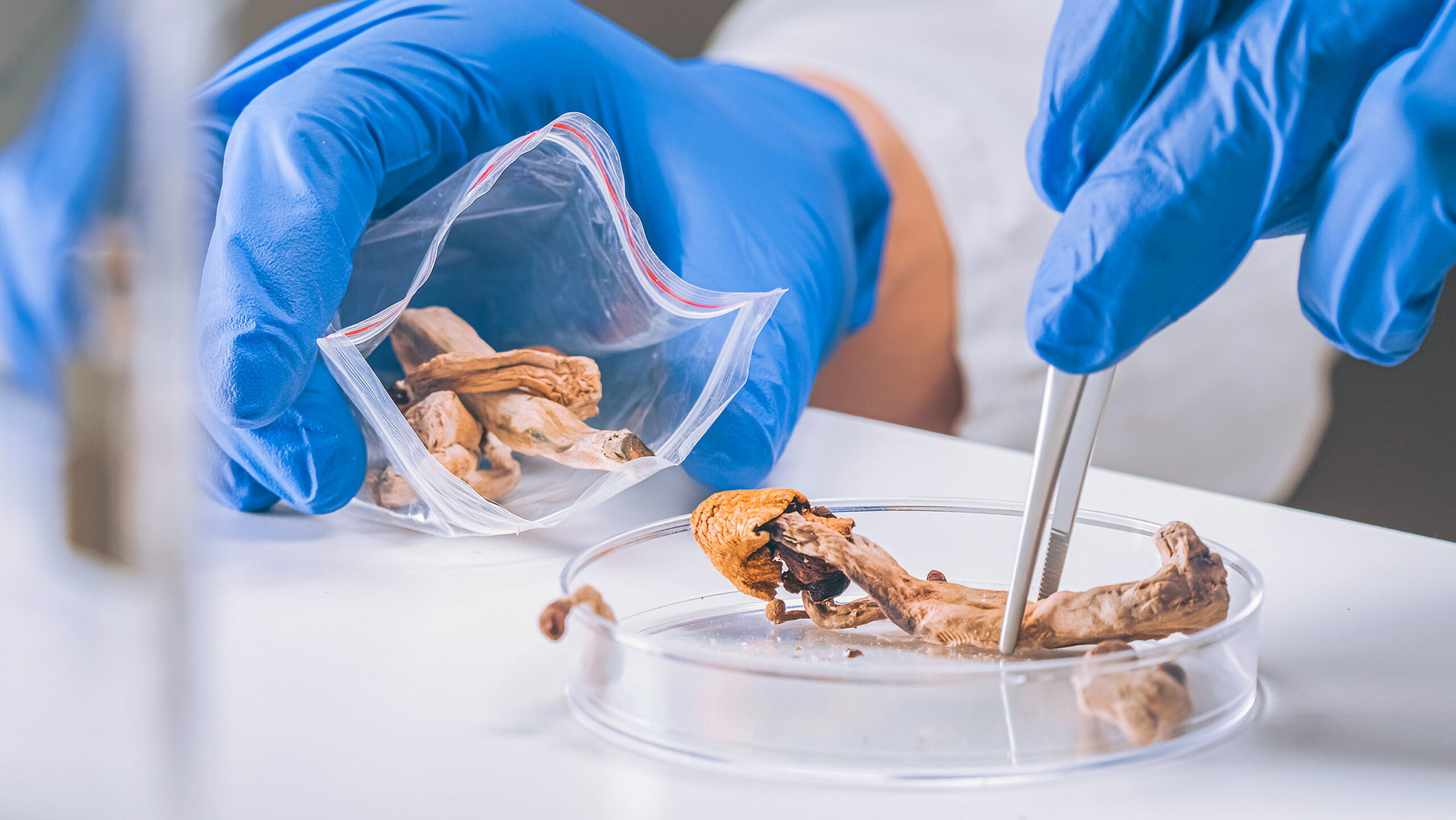
How Scientific Discovery Continues to Transform Psychedelic Research
Scientific progress is rarely defined by a single discovery. Instead, it evolves through decades of careful experimentation, technological innovation, interdisciplinary collaboration, and the continual refinement of knowledge. Psychedelic research provides an excellent example of this process. Over the last century, advances in analytical chemistry, neuroscience, molecular biology, pharmacology, genetics, and computational science have transformed the field from one primarily centered on chemical discovery into one that contributes to some of the most important questions surrounding brain function, cognition, perception, and consciousness. Every breakthrough has expanded scientific understanding while creating new opportunities for future investigation.
What makes contemporary psychedelic research particularly significant is not simply the number of published studies but the diversity of scientific disciplines contributing to its advancement. Researchers from universities, hospitals, neuroscience laboratories, biotechnology institutes, and interdisciplinary research centers continue working together to investigate increasingly complex biological systems using technologies that were unimaginable only a generation ago. This collaborative approach has accelerated discovery while strengthening the quality, transparency, and reproducibility of modern scientific research.
The Evolution of Modern Research Technologies
Many of today’s scientific breakthroughs have been driven by extraordinary improvements in research technology. Earlier generations of scientists relied primarily on laboratory observation and basic chemical analysis, whereas modern investigators now have access to advanced neuroimaging, high resolution molecular microscopy, computational biology, artificial intelligence, genomic sequencing, and sophisticated analytical instrumentation. These technologies allow researchers to investigate biological systems from the molecular level to the organization of entire brain networks, providing unprecedented insight into the complexity of human biology.
The integration of multiple technologies has fundamentally changed scientific methodology. Rather than examining isolated biological processes, researchers now investigate how molecular signaling, neural communication, genetics, metabolism, and cognition interact within highly interconnected systems. This systems based approach has become one of the defining characteristics of contemporary biomedical science and continues to reshape understanding across neuroscience, pharmacology, and molecular biology.
The Growth of Interdisciplinary Collaboration
One of the most important breakthroughs in modern science has been the increasing collaboration between traditionally separate disciplines. Neuroscientists contribute expertise in brain function, chemists investigate molecular structure, pharmacologists examine receptor biology, psychologists study cognition and behavior, molecular biologists analyze cellular signaling, while computational scientists develop advanced mathematical models capable of interpreting enormous biological datasets. Each discipline contributes a unique perspective that strengthens the overall scientific process.
International collaboration has also become a defining feature of psychedelic research. Universities and research institutions around the world now share methodologies, datasets, imaging technologies, and analytical techniques that improve reproducibility and encourage scientific transparency. This cooperative environment allows researchers to compare findings across different laboratories while reducing methodological variation and increasing confidence in published scientific evidence.
Artificial Intelligence and Computational Discovery
Artificial intelligence has become one of the most transformative tools in contemporary scientific research. Modern neuroscience generates enormous quantities of complex data that often exceed the capabilities of traditional statistical analysis. Machine learning algorithms can identify subtle relationships within neuroimaging datasets, predict molecular interactions, analyze genomic information, and assist researchers in recognizing biological patterns that may otherwise remain hidden. These computational methods significantly improve the speed and accuracy of scientific investigation while supporting increasingly sophisticated models of brain organization.
Computational neuroscience has become equally influential by combining mathematics, computer science, engineering, and biology to simulate neural systems and investigate information processing within the brain. Through advanced modeling, researchers can examine theoretical biological mechanisms, compare competing scientific hypotheses, and explore questions that may be difficult to investigate experimentally. Together, artificial intelligence and computational biology are redefining how modern scientific discovery is conducted.
Expanding Knowledge Across Scientific Disciplines
The influence of psychedelic research now extends well beyond neuroscience alone. Discoveries within this field contribute to medicinal chemistry, structural biology, psychology, pharmacology, systems biology, cognitive science, analytical chemistry, genetics, and even artificial intelligence. As researchers continue exploring the biological mechanisms that govern perception, learning, memory, neural communication, and conscious awareness, the knowledge generated benefits numerous areas of biomedical science.
This interdisciplinary expansion illustrates how scientific breakthroughs rarely remain confined to a single specialty. Instead, discoveries often create entirely new research questions that encourage collaboration across multiple scientific fields. The result is a continually expanding body of knowledge that strengthens both individual disciplines and the broader scientific community.
Looking Toward the Next Generation of Discovery
Scientific discovery is an ongoing process rather than a final destination. Every breakthrough answers important questions while revealing new areas that require further investigation. As research technologies continue advancing, scientists are expected to integrate increasingly sophisticated imaging systems, molecular genetics, artificial intelligence, quantum computing, computational biology, and precision analytical chemistry into future investigations. These innovations promise to improve scientific understanding of the brain while revealing biological processes that remain largely unexplored.
The future of psychedelic research will ultimately depend upon the same principles that have driven scientific progress for centuries: curiosity, rigorous experimentation, ethical responsibility, interdisciplinary collaboration, and evidence based investigation. Through these foundations, researchers continue expanding humanity’s understanding of the brain and the extraordinary biological systems that make perception, cognition, learning, and consciousness possible.