Chemistry at the Core of Psychedelic Science
Every psychedelic compound begins as a molecule, and understanding its chemical structure is fundamental to understanding its biological activity. While these compounds are often grouped under a single term, they represent a remarkably diverse collection of molecules with distinct origins, compositions, and pharmacological characteristics. Some are produced naturally by fungi, plants, or cacti through complex biochemical pathways that have evolved over millions of years, while others are synthesized in laboratories through carefully controlled chemical reactions. Despite these differences, each compound can be studied through the same scientific principles that govern molecular chemistry, allowing researchers to examine how atomic structure influences biological function.
Chemistry provides the foundation upon which nearly every other scientific discipline builds its understanding of psychedelics. Before neuroscientists can investigate brain activity or pharmacologists can study receptor interactions, chemists must first identify molecular structures, characterize chemical properties, and understand how compounds behave under different environmental and biological conditions. Through analytical chemistry, medicinal chemistry, and molecular modeling, researchers continue to reveal how small variations in molecular architecture can produce profound differences in biological behavior, making chemistry one of the most influential disciplines within psychedelic research.
Molecules Built by Nature and Science
Natural psychedelic compounds are products of highly sophisticated biological processes. Fungi, flowering plants, and cacti synthesize these molecules through enzyme driven pathways that convert simple organic building blocks into chemically complex structures. These naturally occurring compounds belong to a broader class of molecules known as secondary metabolites, which often serve ecological functions such as defense, signaling, or interactions with surrounding organisms. Studying these biosynthetic pathways provides valuable insight into evolutionary biology while helping scientists understand the extraordinary chemical diversity produced by living systems.
Synthetic compounds follow a different route to creation but are studied with equal scientific rigor. Organic chemists assemble molecules through carefully planned laboratory reactions, allowing precise control over molecular structure, purity, and reproducibility. This precision enables researchers to investigate how subtle modifications to a molecule influence its stability, receptor affinity, metabolism, and overall pharmacological profile. The comparison between naturally occurring and synthetic compounds has become a powerful tool for advancing medicinal chemistry and expanding knowledge of molecular biology.
Understanding Chemical Families
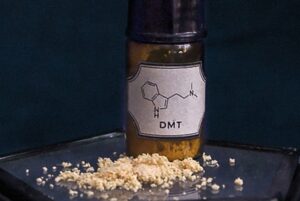
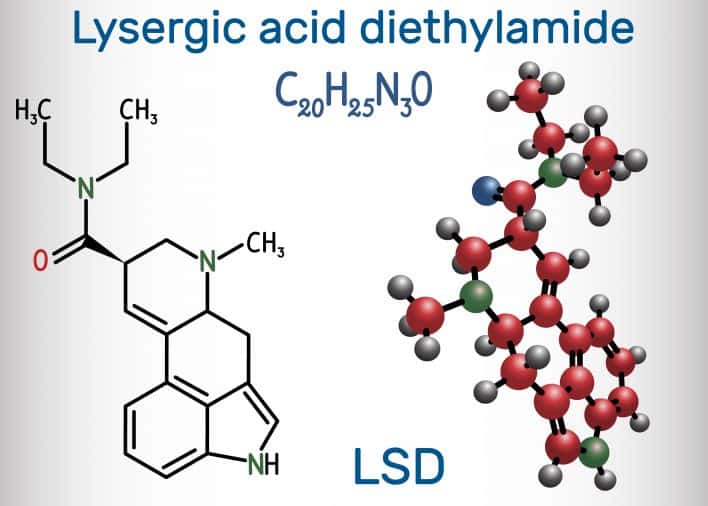
One of the most important principles in psychedelic chemistry is classification. Scientists organize compounds into families based on their molecular structure rather than simply their origin or historical use. Classic psychedelic compounds are commonly classified as tryptamines, phenethylamines, or lysergamides, each possessing distinctive structural characteristics that influence how they interact with biological systems. These classifications provide researchers with a framework for comparing compounds, predicting chemical behavior, and investigating evolutionary relationships between different molecular families.
Although compounds within the same family may share certain structural features, even minor changes in molecular arrangement can influence how they behave. A single modification to a functional group or chemical bond may alter receptor interactions, metabolic pathways, or pharmacokinetic properties. These observations highlight the remarkable precision of molecular science and explain why chemists devote considerable attention to structural analysis before broader biological investigations begin.
From Molecular Structure to Biological Activity
Chemical structure and biological function are inseparably connected. Every molecule possesses unique physical and chemical properties that determine how it dissolves, moves through biological systems, interacts with proteins, and participates in metabolic processes. Researchers investigate these characteristics through the discipline of structure–activity relationships, which examines how changes in molecular architecture influence biological responses. This area of research has become one of the most valuable tools in medicinal chemistry because it helps scientists understand why molecules with similar structures may produce very different biological effects.
Modern computational chemistry has accelerated this process by allowing researchers to simulate molecular behavior before laboratory experiments are performed. Advanced software models how compounds interact with receptors, predicts molecular stability, and identifies structural features that may influence pharmacological activity. These computational approaches complement traditional laboratory methods while reducing the time required to investigate increasingly complex chemical questions.
Analytical Chemistry and Scientific Precision
Once a compound has been identified, analytical chemistry provides the techniques required to examine it with exceptional accuracy. Technologies such as High Performance Liquid Chromatography (HPLC), Gas Chromatography (GC), Liquid Chromatography–Mass Spectrometry (LC–MS), Nuclear Magnetic Resonance (NMR), and Fourier Transform Infrared Spectroscopy (FTIR) enable scientists to identify molecular composition, verify chemical identity, and study structural characteristics at an extraordinary level of detail. Rather than relying on a single analytical method, researchers often combine several complementary techniques to produce comprehensive and reproducible scientific data.
This analytical precision is essential because modern science depends upon reliable evidence. Accurate molecular identification supports research across pharmacology, neuroscience, medicinal chemistry, and biology while ensuring that scientific findings can be independently verified and reproduced. Every analytical advancement strengthens the broader scientific foundation upon which future discoveries are built.
Chemistry Driving Future Discovery
The future of psychedelic chemistry extends far beyond identifying individual molecules. Researchers are increasingly integrating synthetic chemistry, molecular biology, artificial intelligence, computational modeling, and advanced analytical instrumentation to explore questions that were once beyond scientific reach. These innovations are helping scientists understand not only how molecules are constructed, but also how they interact with complex biological systems at the atomic and cellular levels.
As technology continues to evolve, chemistry will remain at the center of psychedelic research. It provides the language through which scientists describe molecular structure, the tools required to investigate biological activity, and the framework that connects natural products with modern biomedical discovery. Every new chemical insight contributes to a broader understanding of the remarkable relationship between molecular design, biological function, and the complexity of life itself.