
Understanding the Brain’s Chemical Communication Network
The human brain depends upon an intricate network of chemical messengers that enable billions of neurons to communicate with extraordinary speed and precision. Among these signaling systems, serotonin has become one of the most extensively studied neurotransmitters because of its broad involvement in regulating cognition, perception, emotional processing, attention, memory, learning, and numerous physiological functions. Rather than acting alone, serotonin influences the nervous system by interacting with a diverse family of specialized receptor proteins distributed throughout the brain and body. These receptors function as molecular gateways, receiving chemical signals and initiating complex biological responses that contribute to the continuous flow of neural communication.
Modern neuroscience has revealed that serotonin signaling is far more sophisticated than scientists once believed. Instead of a single receptor controlling every biological response, researchers have identified multiple serotonin receptor families, each possessing unique structural characteristics, anatomical distribution, and functional roles within the nervous system. This diversity allows serotonin to influence a remarkable range of biological processes while providing scientists with valuable insight into how chemical signaling contributes to the organization and adaptability of the human brain.
What Are Serotonin Receptors?
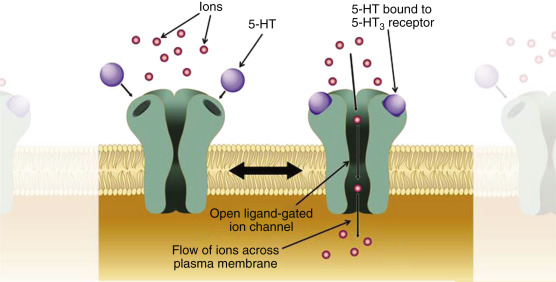
Serotonin receptors are specialized proteins embedded within the membranes of nerve cells where they detect and respond to serotonin molecules released during neural communication. Once activated, these receptors trigger highly coordinated intracellular signaling pathways that influence neuronal activity, communication between brain regions, and numerous physiological processes. Rather than serving identical purposes, each receptor subtype performs distinct biological functions, creating a highly organized signaling system capable of regulating multiple aspects of nervous system activity simultaneously.
Scientists have identified seven major serotonin receptor families, designated 5 HT1 through 5 HT7, with numerous receptor subtypes belonging to each family. Every subtype exhibits unique molecular properties, interacts with different cellular signaling mechanisms, and occupies specific regions throughout the central nervous system. This remarkable diversity has made serotonin receptor biology one of the most important areas of investigation within neuroscience, molecular pharmacology, and medicinal chemistry.
The Importance of the 5 HT2A Receptor
Among all serotonin receptor families, the 5 HT2A receptor has received particular scientific attention because of its prominent role in contemporary neuroscience research. This receptor is widely distributed throughout regions of the cerebral cortex responsible for higher cognitive processes, including perception, attention, learning, sensory integration, and executive function. Its anatomical location and biological activity have made it one of the most thoroughly investigated molecular targets within the study of brain communication and cognitive neuroscience.
Researchers continue examining how activation of the 5 HT2A receptor influences large scale neural connectivity, intracellular signaling pathways, and communication between distributed brain networks. Rather than viewing the receptor in isolation, scientists investigate how it participates within broader biological systems involving multiple neurotransmitters, neural circuits, and molecular signaling cascades. This systems based perspective has significantly expanded understanding of receptor biology while contributing to increasingly sophisticated models of brain function.
From Molecular Signals to Complex Thought
Every conscious experience begins with molecular events occurring at the microscopic level. When serotonin binds to its receptors, it initiates a sequence of biochemical processes that influence cellular communication, protein activity, gene expression, and synaptic transmission. These molecular interactions ultimately contribute to the coordinated activity of billions of neurons operating across extensive functional networks within the brain. The extraordinary complexity of this communication demonstrates how microscopic biological events can support sophisticated cognitive functions such as language, reasoning, memory, creativity, and conscious awareness.
Advances in structural biology, molecular imaging, and computational chemistry have enabled researchers to examine serotonin receptors with unprecedented detail. Scientists can now visualize receptor architecture, investigate molecular binding mechanisms, and simulate receptor behavior using advanced computational models. These technologies continue transforming neuroscience by providing increasingly detailed insight into how molecular interactions contribute to large scale brain organization.
Investigating Receptors Through Modern Science
The study of serotonin receptors relies upon collaboration between numerous scientific disciplines. Molecular biologists investigate receptor structure and cellular signaling, pharmacologists examine receptor interactions with chemical compounds, neuroscientists explore functional brain networks, while computational scientists analyze enormous datasets generated through advanced imaging and molecular simulations. Together, these complementary fields provide a comprehensive understanding of receptor biology that would be impossible through isolated investigation.
Modern laboratories employ techniques such as cryogenic electron microscopy, functional magnetic resonance imaging, positron emission tomography, molecular spectroscopy, and genomic analysis to investigate receptor function across multiple levels of biological organization. By combining these approaches, researchers continue refining scientific models that explain how serotonin signaling contributes to cognition, perception, learning, and neural adaptability.
Expanding the Frontiers of Neuroscience
Serotonin receptor research continues to occupy a central position within modern neuroscience because it connects molecular biology with systems neuroscience, medicinal chemistry, structural biology, and computational science. Every new discovery improves understanding of how neurons communicate while revealing increasingly sophisticated relationships between receptor activity, neural networks, and cognitive function. These investigations extend beyond individual receptor proteins to address broader questions concerning the organization of the nervous system and the biological foundations of human consciousness.
As analytical technologies continue advancing, researchers are expected to achieve even greater precision in mapping receptor distribution, modeling molecular interactions, and understanding the dynamic processes that govern neural communication. Through interdisciplinary collaboration and rigorous scientific investigation, serotonin receptor biology will remain one of the most influential areas of neuroscience, continuing to illuminate the remarkable complexity of the human brain and its intricate systems of chemical communication.