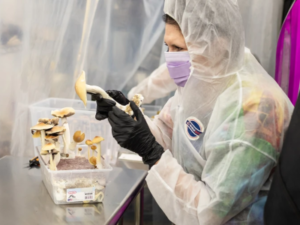

A Century That Transformed Scientific Understanding
The twentieth century marked one of the most transformative periods in the history of psychedelic research. During these one hundred years, advances in chemistry, pharmacology, neuroscience, anthropology, psychology, and analytical science dramatically expanded humanity’s understanding of naturally occurring and laboratory synthesized compounds. What began as isolated botanical investigations gradually developed into a multidisciplinary field supported by universities, pharmaceutical laboratories, research institutes, and scientific organizations around the world. The century witnessed remarkable technological innovation, important scientific discoveries, changing research priorities, and the emergence of entirely new disciplines that continue to shape contemporary psychedelic science.
Unlike previous historical periods, the twentieth century produced an unprecedented amount of documented scientific literature. Improvements in laboratory equipment, analytical chemistry, molecular biology, scientific publishing, and international collaboration enabled researchers to investigate complex biological systems with greater precision than ever before. Every decade contributed new knowledge that gradually connected chemistry, biology, neuroscience, psychology, and medicine into an increasingly integrated understanding of how the brain and natural compounds could be studied through rigorous scientific investigation.
The Early Decades of Scientific Exploration
At the beginning of the twentieth century, scientific attention focused primarily on cataloging botanical diversity and investigating naturally occurring compounds found within plants and fungi. Botanists continued documenting species across Africa, Asia, Europe, Oceania, and the Americas, while chemists developed increasingly sophisticated techniques capable of isolating and identifying complex natural molecules. These early investigations established many of the taxonomic and chemical foundations that would later support advances in pharmacology and neuroscience.
Pharmaceutical research also expanded rapidly during this period. Scientists began exploring how naturally derived compounds could contribute to biological understanding through controlled laboratory investigation. Improvements in organic synthesis, spectroscopy, chromatography, and structural chemistry allowed researchers to characterize molecules with growing accuracy, creating opportunities for future discoveries that would influence multiple branches of biomedical science.
A New Era of Chemical and Neuroscientific Discovery
The middle decades of the twentieth century witnessed remarkable advances in organic chemistry and neuropharmacology. Researchers increasingly investigated how molecular structure influenced biological activity, leading to important discoveries that strengthened understanding of receptor biology, neurotransmission, and cellular communication. During this period, scientific disciplines that had previously developed independently began working together more closely, creating new opportunities for interdisciplinary research.
Technological innovation also accelerated scientific progress. Laboratories introduced increasingly advanced analytical instruments capable of examining molecular structures with exceptional precision, while developments in electrophysiology and experimental neuroscience provided new methods for investigating the nervous system. These advances significantly improved the quality and reliability of scientific research while encouraging broader collaboration between chemists, pharmacologists, and neuroscientists.
Expanding International Research Networks
As the century progressed, scientific collaboration became increasingly international. Universities, hospitals, research institutes, and government laboratories established partnerships that encouraged the exchange of ideas, experimental methods, and scientific publications across national boundaries. This collaborative environment strengthened research quality by allowing independent laboratories to compare findings, improve experimental design, and validate scientific observations through reproducible investigation.
The growth of scientific journals, international conferences, and academic societies further accelerated this exchange of knowledge. Researchers gained access to broader scientific literature, encouraging interdisciplinary thinking that connected chemistry, biology, psychology, anthropology, ecology, and neuroscience. These developments transformed psychedelic research into a truly global scientific endeavor supported by expertise from numerous academic disciplines.
Technological Progress Reshaping Research
The latter decades of the twentieth century introduced technologies that fundamentally changed how scientists investigated biological systems. High Performance Liquid Chromatography, Nuclear Magnetic Resonance spectroscopy, Mass Spectrometry, advanced microscopy, and computer assisted data analysis dramatically improved the precision of laboratory research. Neuroscience also benefited from the development of sophisticated imaging technologies capable of observing the living brain in ways that had previously been impossible.
Computing technology emerged as another major influence on scientific investigation. Digital data processing allowed researchers to analyze increasingly complex datasets, compare experimental results with greater accuracy, and develop computational models capable of describing biological systems. These innovations established the technological foundations upon which much of twenty first century neuroscience and molecular biology continue to build.
A Lasting Scientific Legacy
The twentieth century left an enduring legacy that continues to influence psychedelic science today. It was a period defined by rapid scientific advancement, remarkable technological innovation, and the gradual integration of multiple academic disciplines into a unified research framework. The discoveries made during this era strengthened understanding of chemistry, pharmacology, neuroscience, botany, mycology, and molecular biology while demonstrating the importance of rigorous experimentation, careful observation, and international scientific collaboration.
Modern researchers continue building upon the knowledge established throughout the twentieth century. Advances in artificial intelligence, computational biology, genomics, structural biology, neuroimaging, and analytical chemistry all trace part of their scientific heritage to the discoveries and methodologies developed during this remarkable period. The twentieth century therefore represents not only a chapter in the history of psychedelic research but also one of the defining eras in the broader history of modern science, laying the groundwork for future generations of interdisciplinary discovery.