Understanding Traditional Ecological Knowledge Across Indigenous Cultures
Long before the emergence of universities, scientific institutions, and written botanical records, Indigenous communities across the world developed sophisticated systems of environmental knowledge through continuous observation of nature. For thousands of years, these communities carefully studied local ecosystems, seasonal cycles, wildlife behavior, plant diversity, soil conditions, and climate patterns, creating extensive bodies of knowledge that were passed from one generation to the next. This accumulated understanding, often referred to as Traditional Ecological Knowledge (TEK), represents one of humanity’s oldest and most enduring systems of environmental learning. Today, researchers recognize that this knowledge provides valuable insight into biodiversity, ecosystem management, conservation, and the long history of human interaction with the natural world.
Modern anthropology and ethnobotany approach Indigenous knowledge with increasing respect and scientific rigor. Rather than viewing traditional knowledge as separate from science, researchers now understand that centuries of careful environmental observation have contributed significantly to our understanding of plants, fungi, ecology, and biological diversity. This collaborative perspective has strengthened relationships between Indigenous communities and scientific institutions while encouraging more comprehensive approaches to biodiversity research and environmental conservation.
Traditional Ecological Knowledge as a Living Science
Traditional Ecological Knowledge is built through direct interaction with nature over many generations. Indigenous communities observed flowering seasons, rainfall patterns, soil fertility, forest regeneration, animal migration, fungal growth, and countless other environmental processes long before these subjects became formal scientific disciplines. This knowledge developed through practical experience, careful observation, and continuous adaptation to changing ecosystems rather than through laboratory experimentation alone.
Scientists increasingly recognize that these observations often extend across centuries, providing ecological information that cannot easily be reproduced through short term research projects. Because this knowledge reflects long periods of environmental continuity, it has become an important resource for understanding climate variability, biodiversity conservation, habitat management, and ecosystem resilience. The integration of Traditional Ecological Knowledge with contemporary scientific methods continues to enrich environmental research around the world.
Sacred Plants Within Cultural Landscapes
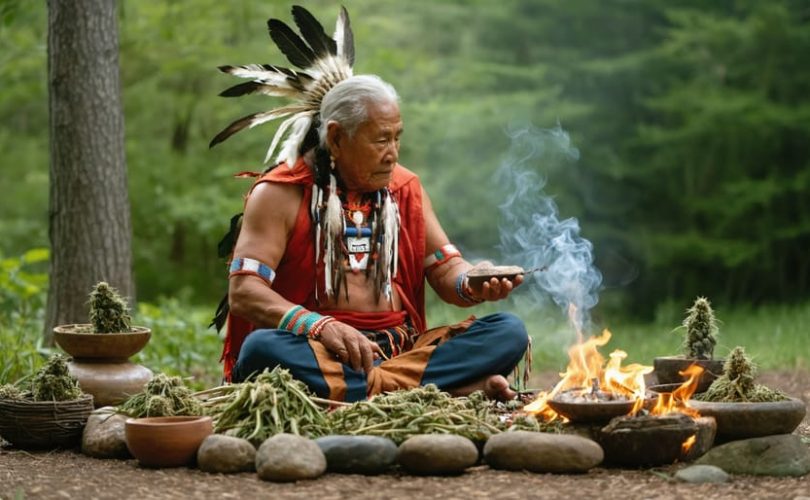
Across many Indigenous societies, certain plant species have held important cultural, ecological, or ceremonial significance within broader systems of traditional knowledge. Anthropologists emphasize that these relationships cannot be understood simply by examining the plants themselves. Instead, they must be viewed within the wider cultural, environmental, historical, and spiritual contexts in which they developed. Plants often formed part of larger knowledge systems that included seasonal calendars, environmental stewardship, language, oral history, and community identity.
Scientific research avoids broad generalizations because each Indigenous culture possesses its own unique history and relationship with local biodiversity. The botanical traditions of the Amazon Basin differ considerably from those of North America, Central Africa, Australia, Southeast Asia, or the Arctic. Understanding these differences allows researchers to appreciate the remarkable diversity of Indigenous knowledge while avoiding oversimplified interpretations of complex cultural histories.
Ethnobotany Bridging Cultures and Science
Ethnobotany serves as the scientific bridge between botanical research and human cultural history. Researchers document plant diversity, investigate traditional classification systems, examine ecological relationships, and compare historical observations with modern botanical science. This interdisciplinary approach has become increasingly important because it combines evidence from botany, anthropology, archaeology, ecology, linguistics, geography, and history to create a more complete understanding of the relationship between people and plants.
Modern ethnobotanical research also places strong emphasis on ethical collaboration. Scientists increasingly work alongside Indigenous communities through partnerships that recognize cultural knowledge, encourage mutual learning, and promote responsible scientific practice. These collaborations contribute to biodiversity conservation while ensuring that traditional knowledge is acknowledged with respect and accuracy.
Preserving Cultural and Biological Diversity
Cultural diversity and biological diversity are closely connected. Many of the world’s richest ecosystems continue to coincide with territories where Indigenous communities have maintained long standing relationships with local environments. Tropical rainforests, mountain ecosystems, deserts, wetlands, grasslands, and boreal forests often remain biologically rich because of generations of environmental stewardship that promoted sustainable interaction with natural resources. Conservation scientists now recognize that protecting biodiversity frequently involves preserving both ecosystems and the cultural knowledge associated with them.
International conservation initiatives increasingly encourage cooperation between scientists, governments, environmental organizations, and Indigenous communities. These partnerships support habitat protection, species documentation, ecological restoration, and sustainable environmental management while acknowledging the important contributions that Indigenous knowledge continues to make to contemporary conservation science.
The Continuing Importance of Indigenous Knowledge
As environmental challenges become increasingly complex, the value of Indigenous knowledge continues to grow within global scientific research. Climate change, biodiversity loss, habitat degradation, and ecosystem conservation all require long term perspectives that combine advanced scientific technology with generations of environmental observation. Traditional Ecological Knowledge offers unique insight into ecological resilience, species behavior, seasonal variation, and sustainable environmental management that complements modern research methodologies.
The continued collaboration between Indigenous communities and the scientific community represents one of the most promising developments within contemporary environmental science. By combining traditional knowledge with advances in genetics, ecology, remote sensing, artificial intelligence, and conservation biology, researchers are developing more comprehensive approaches to understanding and protecting the natural world. This partnership reflects a shared commitment to preserving both cultural heritage and biological diversity for future generations while deepening humanity’s understanding of the remarkable ecosystems upon which all life depends.