Visualizing the Living Brain Through Modern Science
One of the greatest achievements in contemporary neuroscience has been the ability to observe the living human brain without the need for invasive procedures. For centuries, scientists could only infer how the brain functioned through anatomy, behavioral observations, and clinical case studies. Today, advances in neuroimaging have transformed that approach, allowing researchers to examine brain activity, neural communication, and functional organization with extraordinary precision. These technological breakthroughs have fundamentally changed how scientists investigate cognition, perception, memory, learning, attention, and consciousness, providing a clearer understanding of one of the most complex biological systems ever studied.
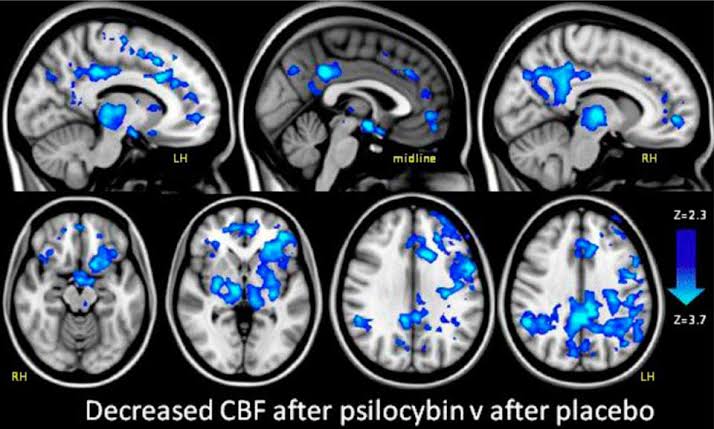
Within psychedelic research, brain imaging has become an indispensable scientific tool. Rather than relying exclusively on subjective observations or behavioral assessments, researchers are now able to examine measurable patterns of neural activity during carefully designed experimental studies. This combination of biological measurement and cognitive investigation enables scientists to compare observable changes in brain function with broader questions concerning neural communication, information processing, and the organization of large scale brain networks. As a result, brain imaging has become one of the most influential technologies supporting modern psychedelic neuroscience.
From Anatomy to Functional Brain Mapping
Early neuroscience focused primarily on identifying the physical structures of the brain. While anatomical research established the basic organization of the nervous system, it provided only limited insight into how different regions communicate while a person is actively thinking, learning, or processing information. The development of functional brain imaging changed this perspective by allowing scientists to observe the brain in action rather than viewing it as a static biological structure.
Modern neuroimaging demonstrates that cognitive processes rarely originate from isolated regions of the brain. Instead, perception, language, memory, emotional regulation, and decision making emerge through continuous communication between interconnected neural networks distributed throughout the cerebral cortex and deeper brain structures. Understanding these dynamic relationships has become one of the defining objectives of contemporary neuroscience, and brain imaging continues to provide valuable evidence supporting increasingly sophisticated models of brain organization.
The Technologies Behind Modern Brain Imaging
Contemporary neuroscience relies on several complementary imaging technologies, each designed to investigate different aspects of brain function. Functional Magnetic Resonance Imaging, commonly known as fMRI, measures changes in blood oxygenation that reflect neural activity across different regions of the brain. Positron Emission Tomography, or PET, enables researchers to study metabolic activity and molecular processes occurring within living brain tissue. Electroencephalography (EEG) records electrical signals produced by neurons with exceptional temporal precision, while Magnetoencephalography (MEG) detects the magnetic fields generated during neural communication, allowing scientists to examine the timing and coordination of brain activity.
Rather than competing with one another, these technologies provide complementary perspectives. Researchers frequently combine multiple imaging methods to build a more comprehensive understanding of brain function, integrating structural, functional, electrical, and metabolic information into a unified scientific framework. This multidisciplinary approach has dramatically improved the accuracy and depth of modern neuroscience research.
Understanding Neural Networks
One of the most significant discoveries made possible through advanced brain imaging is the recognition that the brain functions as an interconnected network rather than a collection of independent regions. Large scale communication networks coordinate sensory processing, attention, executive function, language, memory, and self awareness through continuous information exchange. These networks remain active even during periods of rest, demonstrating the remarkable complexity of the brain’s internal organization.
Brain imaging allows researchers to investigate how information travels across these networks and how different regions coordinate their activity during various cognitive processes. Sophisticated computational analysis can identify patterns of connectivity that would be impossible to observe through traditional anatomical studies alone. These discoveries continue reshaping scientific understanding of how the brain integrates information while maintaining efficient communication across billions of neurons.
Artificial Intelligence and the Future of Neuroimaging
The rapid growth of artificial intelligence and computational neuroscience has introduced new possibilities for interpreting complex brain imaging data. Modern imaging studies generate enormous datasets containing millions of measurements, far exceeding the capacity of traditional analytical methods. Machine learning algorithms now assist researchers by identifying subtle patterns of neural connectivity, detecting relationships between brain regions, and improving the accuracy of computational models that describe brain organization.
These technological advances are accelerating scientific discovery while enabling increasingly detailed investigations into neural communication and cognitive function. As artificial intelligence becomes more integrated with neuroimaging research, scientists expect to develop even more sophisticated models capable of revealing previously hidden aspects of brain activity, information processing, and biological organization.
Expanding Our Understanding of the Human Brain
Brain imaging has fundamentally transformed neuroscience by providing direct insight into the living human brain. Through continuous innovation in imaging technology, computational analysis, molecular biology, and systems neuroscience, researchers now possess tools capable of examining neural function with unprecedented precision. These advances continue to improve scientific understanding of cognition, perception, memory, learning, and consciousness while supporting broader investigations into the biological principles that govern human intelligence.
As imaging technologies become increasingly sophisticated, future research will likely combine ultra high resolution imaging, molecular genetics, artificial intelligence, and advanced computational modeling to create even more comprehensive representations of the human brain. Every technological breakthrough contributes another piece to one of science’s greatest challenges: understanding how billions of neurons, trillions of synapses, and countless molecular interactions come together to produce the extraordinary phenomenon of human consciousness.