A Complete Glossary for Understanding Psychedelic Science
Every scientific discipline has its own vocabulary, and psychedelic research is no exception. Whether reading a scientific journal, educational article, university publication, or research paper, readers will frequently encounter technical terms drawn from chemistry, neuroscience, pharmacology, botany, molecular biology, genetics, and ecology. For newcomers, this specialized language can appear complex, but each term has a precise scientific meaning that helps researchers communicate accurately across laboratories and academic institutions worldwide. Understanding this terminology is one of the most important steps toward building a solid foundation in psychedelic science.
Rather than memorizing isolated definitions, it is helpful to understand how these scientific concepts connect with one another. Chemistry explains molecular structure, biology describes living systems, pharmacology investigates biological interactions, neuroscience studies the nervous system, while taxonomy organizes living organisms according to evolutionary relationships. Together, these disciplines create the scientific framework through which psychedelics are investigated. The glossary below introduces many of the most frequently encountered terms, providing clear explanations that support further learning throughout this educational resource.
Core Scientific Terms
Alkaloid
An alkaloid is a naturally occurring organic compound that contains nitrogen atoms and is produced by many plants, fungi, and microorganisms through specialized metabolic pathways. Alkaloids represent one of the largest groups of naturally occurring bioactive molecules studied within natural product chemistry.
Analytical Chemistry
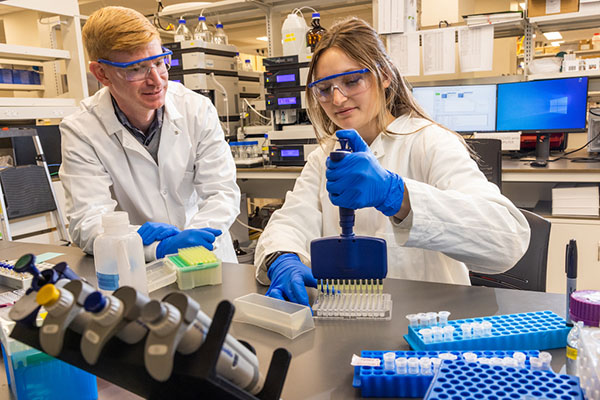
Analytical chemistry is the branch of chemistry dedicated to identifying, measuring, and characterizing chemical substances. Scientists use sophisticated techniques such as Mass Spectrometry, High Performance Liquid Chromatography, and Nuclear Magnetic Resonance spectroscopy to analyze molecular composition with exceptional precision.
Biosynthesis
Biosynthesis refers to the biological process through which living organisms produce complex molecules from simpler chemical building blocks. These reactions are controlled by enzymes encoded within an organism’s genetic material and are fundamental to plant, fungal, and microbial metabolism.
Biochemistry
Biochemistry is the study of chemical reactions occurring within living organisms. It explores how proteins, enzymes, nucleic acids, carbohydrates, lipids, and other biological molecules interact to sustain life and regulate cellular function.
Botany
Botany is the scientific study of plants, including their classification, evolution, anatomy, physiology, genetics, ecology, and biodiversity. Botanists investigate the plant species that naturally produce numerous biologically significant compounds.
Computational Biology
Computational biology combines biology, mathematics, statistics, and computer science to analyze complex biological data. Researchers use computational models to investigate genetics, protein structure, molecular interactions, and biological networks.
Ecology
Ecology examines the relationships between living organisms and their surrounding environment. Ecologists investigate how plants, fungi, animals, microorganisms, soil, climate, and ecosystems interact to maintain biodiversity and environmental stability.
Enzyme
An enzyme is a specialized protein that accelerates biochemical reactions within living cells. Enzymes regulate nearly every metabolic process, including the biosynthesis of naturally occurring compounds found in plants and fungi.
Ethnobotany
Ethnobotany is the interdisciplinary study of relationships between people and plants throughout history. It combines botany, anthropology, archaeology, ecology, and cultural history to understand how societies have observed and interacted with botanical diversity.
Genomics
Genomics is the study of an organism’s complete genetic material, known as its genome. Scientists use genomic sequencing to investigate evolution, biodiversity, biosynthetic pathways, and evolutionary relationships among species.
Chemistry and Pharmacology Terms
Lysergamide
A lysergamide is a compound derived from lysergic acid and classified according to its characteristic molecular structure. Lysergamides represent one of the principal chemical families investigated within medicinal chemistry.
Mass Spectrometry
Mass Spectrometry is an analytical technique used to determine the molecular weight and structural composition of chemical compounds with extremely high accuracy.
Metabolism
Metabolism encompasses all chemical reactions occurring within living organisms. These reactions allow cells to obtain energy, synthesize essential molecules, regulate biological functions, and maintain life.
Metabolomics
Metabolomics is the large scale scientific study of metabolites, the small molecules produced during metabolism. This discipline helps researchers understand biochemical pathways and cellular activity.
Molecular Biology
Molecular biology investigates biological processes at the level of DNA, RNA, proteins, and cellular regulation. It provides insight into how genes direct biological function and molecular synthesis.
Neurotransmitter
A neurotransmitter is a chemical messenger released by neurons to transmit information between nerve cells across specialized junctions called synapses. Neurotransmitters play essential roles in communication throughout the nervous system.
Neuroscience
Neuroscience is the scientific study of the brain, spinal cord, peripheral nerves, and the entire nervous system. It integrates biology, chemistry, psychology, genetics, engineering, and computer science to understand neural function.
Pharmacology
Pharmacology investigates how chemical compounds interact with biological systems. Researchers study molecular mechanisms, receptor biology, cellular communication, metabolism, and biochemical pathways using rigorous experimental methods.
Phenethylamine
A phenethylamine is a chemical family defined by a characteristic molecular backbone. Mescaline is one of the best known naturally occurring phenethylamines studied within natural product chemistry.
Receptor
A receptor is a specialized protein located on the surface or inside cells that recognizes specific molecules and initiates biological signaling processes. Receptors are fundamental to cellular communication throughout living organisms.
Biological Classification Terms
Secondary Metabolite
A secondary metabolite is a naturally occurring compound produced by plants, fungi, or microorganisms that is not directly involved in basic cellular growth but often contributes to ecological adaptation, defense, and environmental interactions.
Taxonomy
Taxonomy is the scientific system used to identify, name, and classify living organisms according to their evolutionary relationships. Modern taxonomy combines anatomical observation with molecular genetics and DNA analysis.
Tryptamine
A tryptamine is a family of organic compounds biosynthesized from the amino acid tryptophan. Psilocybin and DMT belong to this important chemical classification.
Why Scientific Vocabulary Matters
Scientific terminology is far more than a collection of technical words. It provides the precision necessary for researchers around the world to communicate clearly, compare experimental findings, and build upon previous discoveries. A strong understanding of these foundational concepts allows readers to interpret scientific publications more confidently while appreciating how chemistry, biology, neuroscience, pharmacology, botany, and ecology work together within psychedelic research.
As you continue exploring this educational resource, these terms will appear repeatedly across articles discussing plants, fungi, molecular biology, laboratory science, neuroscience, history, and natural product chemistry. Becoming familiar with this vocabulary will make advanced scientific topics easier to understand and provide a stronger foundation for lifelong learning in psychedelic science.