The Chemist Whose Research Influenced Generations of Scientific Discovery
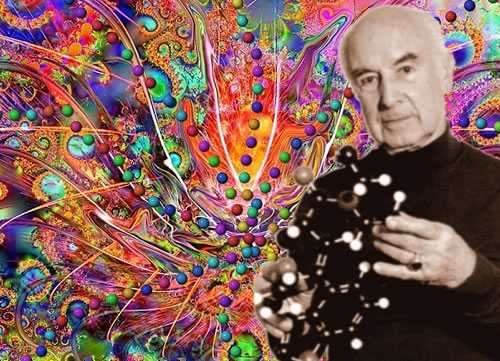
Albert Hofmann is widely regarded as one of the most influential chemists of the twentieth century. Although his name is often associated with the discovery of lysergic acid diethylamide (LSD), his scientific legacy extends far beyond a single compound. Throughout a career spanning several decades, Hofmann made significant contributions to organic chemistry, natural product research, medicinal chemistry, pharmaceutical science, and the broader understanding of biologically active compounds found in nature. His work demonstrated how careful scientific observation, rigorous experimentation, and intellectual curiosity could transform the understanding of complex biological molecules and inspire entirely new directions in scientific research.
What distinguishes Hofmann’s legacy is not simply the discoveries he made, but the scientific principles that guided his work. He believed that nature represented an extraordinary source of chemical diversity waiting to be understood through systematic investigation. By combining traditional botanical knowledge with modern laboratory techniques, Hofmann helped establish research approaches that continue to influence medicinal chemistry, pharmacology, neuroscience, and natural products science. His career serves as an enduring example of how interdisciplinary thinking can advance scientific knowledge across multiple fields.
A Career Dedicated to Natural Product Chemistry
Born in 1906 in Baden, Switzerland, Albert Hofmann developed an early fascination with the natural world, particularly the remarkable diversity of plants and the chemical compounds they produce. After studying chemistry at the University of Zurich, he specialized in organic chemistry before joining Sandoz Laboratories, where he began investigating naturally occurring molecules derived from medicinal plants and fungi. His work reflected a growing scientific movement that sought to understand how complex natural compounds could contribute to pharmaceutical research and biological discovery.
At Sandoz, Hofmann became deeply involved in studying ergot alkaloids, a family of naturally occurring compounds produced by the fungus Claviceps purpurea. His investigations required exceptional precision in organic synthesis, analytical chemistry, and molecular characterization. Through years of careful experimentation, he synthesized and analyzed numerous chemical derivatives while contributing valuable knowledge to medicinal chemistry and pharmaceutical development. His disciplined laboratory methods became a defining characteristic of his scientific career.
Scientific Curiosity as a Driving Force
One of the defining qualities of Albert Hofmann’s work was his commitment to scientific curiosity. Rather than limiting his investigations to predetermined outcomes, he approached research with an openness that allowed unexpected observations to become opportunities for discovery. This mindset reflected one of the core principles of scientific investigation: important advances often emerge when researchers carefully examine results that fall outside initial expectations.
Hofmann frequently emphasized the importance of observation, patience, and methodological accuracy throughout his career. His detailed laboratory documentation, careful experimental design, and willingness to revisit previous research exemplified the scientific process at its highest standard. These qualities earned him respect throughout the international scientific community and continue to inspire researchers working across chemistry, biology, pharmacology, and neuroscience today.
Contributions Beyond a Single Discovery
Although the discovery of LSD remains the most widely recognized event in Hofmann’s career, it represents only one part of his broader scientific contribution. Throughout his decades of research, he investigated numerous naturally occurring compounds, improved methods of chemical synthesis, and contributed significantly to the expanding field of natural products chemistry. His work helped demonstrate that plants, fungi, and microorganisms possess extraordinary biochemical diversity that could be explored through rigorous scientific investigation.
Hofmann’s research also strengthened the relationship between chemistry and biology. By examining how molecular structure influences biological activity, he contributed to the development of structure activity research, medicinal chemistry, and receptor pharmacology. These disciplines continue to play central roles in modern pharmaceutical science and biomedical research, illustrating the lasting influence of his scientific approach.
An Influence on Modern Scientific Research
The impact of Albert Hofmann’s work extends well beyond his own laboratory. His research encouraged greater collaboration between chemists, pharmacologists, neuroscientists, botanists, molecular biologists, and medical researchers, helping establish the interdisciplinary culture that characterizes much of modern scientific investigation. Many of today’s advances in neuroscience, analytical chemistry, molecular biology, and pharmaceutical research build upon principles that were strengthened through the careful study of naturally occurring compounds and their chemical properties.
His publications, lectures, and scientific writings also helped communicate complex chemical concepts to wider academic audiences, encouraging continued exploration of natural product chemistry throughout universities and research institutions worldwide. The influence of his work can still be seen in laboratories that investigate plant chemistry, fungal biology, receptor science, medicinal chemistry, and neuroscience.
A Lasting Legacy in the History of Science
Albert Hofmann’s legacy is ultimately defined by his lifelong commitment to scientific discovery, intellectual curiosity, and respect for the natural world. His work demonstrated that meaningful scientific progress depends upon careful experimentation, critical thinking, interdisciplinary collaboration, and an openness to unexpected discoveries. Rather than viewing chemistry as an isolated discipline, he recognized its ability to connect biology, medicine, ecology, and pharmacology into a unified understanding of life and the natural environment.
Today, historians of science continue to regard Albert Hofmann as one of the twentieth century’s most influential natural products chemists. His research continues to inspire new generations of scientists investigating molecular biology, medicinal chemistry, plant science, neuroscience, and pharmaceutical innovation. More than a century after his birth, his contributions remain an enduring reminder that scientific discovery is driven not only by technology, but also by curiosity, precision, and a lifelong dedication to understanding the remarkable complexity of the natural world.