How Artificial Intelligence Is Transforming Modern Scientific Research
Artificial Intelligence (AI) has become one of the most influential technological developments in contemporary scientific research. Across neuroscience, molecular biology, analytical chemistry, pharmacology, genetics, structural biology, and computational science, AI is changing how researchers collect, organize, analyze, and interpret scientific information. Rather than replacing scientists, artificial intelligence functions as an advanced analytical partner capable of processing enormous volumes of complex data at speeds far beyond traditional computational methods. Within psychedelic research, AI supports scientists by identifying hidden biological patterns, accelerating molecular analysis, improving laboratory efficiency, and expanding the ability to investigate increasingly sophisticated scientific questions.
Modern psychedelic research generates exceptionally large and diverse datasets. Brain imaging studies produce millions of individual measurements, genomic sequencing reveals vast quantities of genetic information, metabolomic analyses identify thousands of naturally occurring compounds, and analytical chemistry continuously generates highly detailed molecular data. Interpreting this information requires computational systems capable of recognizing relationships that would be difficult, and often impossible, to detect through manual analysis alone. Artificial intelligence provides researchers with these capabilities while improving accuracy, consistency, and scientific efficiency across numerous fields of investigation.
Machine Learning and Scientific Discovery
At the center of artificial intelligence is machine learning, a branch of computer science that enables algorithms to recognize patterns within data and continuously improve their analytical performance as additional information becomes available. Unlike conventional software that follows fixed instructions, machine learning systems identify statistical relationships through repeated analysis, allowing researchers to investigate highly complex biological systems with remarkable precision.
Within laboratory science, machine learning assists researchers in examining molecular structures, identifying chemical signatures, analyzing genomic sequences, interpreting neuroimaging data, and exploring biological pathways. By recognizing subtle patterns hidden within enormous datasets, these algorithms help scientists generate new research questions, refine experimental models, and accelerate scientific discovery without replacing the critical judgment and expertise of experienced researchers.
Artificial Intelligence in Computational Chemistry
Computational chemistry has become one of the fields most profoundly influenced by artificial intelligence. Modern laboratories routinely use AI driven computational models to investigate molecular structures, predict chemical properties, simulate molecular interactions, and analyze complex biochemical systems. These simulations enable researchers to examine molecular behavior in extraordinary detail while reducing the time required for many stages of scientific investigation.
Artificial intelligence also assists in the interpretation of data generated by sophisticated analytical technologies such as High Performance Liquid Chromatography, Liquid Chromatography Mass Spectrometry, Nuclear Magnetic Resonance spectroscopy, and X-ray crystallography. By integrating multiple sources of analytical information, AI helps researchers develop comprehensive molecular models that support structural biology, medicinal chemistry, and natural product research with increasing precision.
Advancing Neuroscience Through Artificial Intelligence
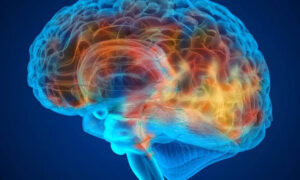
Modern neuroscience depends heavily upon advanced computational analysis because the human brain generates extraordinarily complex patterns of biological activity. Brain imaging technologies including Functional Magnetic Resonance Imaging, Positron Emission Tomography, Electroencephalography, Magnetoencephalography, and diffusion imaging produce massive datasets that require sophisticated analytical approaches to interpret accurately.
Artificial intelligence enables neuroscientists to analyze neural networks, identify patterns of functional connectivity, reconstruct three dimensional models of brain organization, and examine relationships between different regions of the nervous system. These computational methods complement traditional statistical analysis by providing additional tools capable of exploring highly complex neural systems while supporting more detailed investigations into brain organization and biological communication.
Bioinformatics and Multiomics Research
The rapid expansion of genomics, transcriptomics, proteomics, and metabolomics has created one of the largest data challenges in modern biology. Collectively known as multiomics, these scientific disciplines investigate biological systems at multiple levels, generating vast amounts of interconnected information concerning genes, proteins, metabolites, and cellular regulation. Artificial intelligence has become indispensable for integrating these diverse datasets into coherent biological models.
Bioinformatics platforms equipped with machine learning algorithms enable researchers to compare genomic sequences, identify evolutionary relationships, investigate biosynthetic pathways, analyze protein networks, and examine metabolic processes across numerous species. These integrated analyses provide valuable insight into biological complexity while supporting interdisciplinary collaboration between molecular biology, genetics, ecology, chemistry, and neuroscience.
Automation, Precision, and Laboratory Innovation
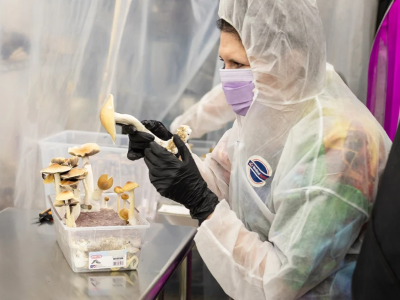
Artificial intelligence is also transforming laboratory operations through intelligent automation. Modern research facilities increasingly incorporate automated analytical instruments, robotic sample handling systems, digital quality control platforms, and AI assisted laboratory management software. These technologies improve experimental consistency, reduce procedural variability, strengthen quality assurance, and enable researchers to process significantly larger numbers of samples with exceptional precision.
Automation does not eliminate the role of scientists. Instead, it allows researchers to dedicate more time to experimental design, scientific interpretation, hypothesis development, and interdisciplinary collaboration while repetitive analytical tasks are performed with greater efficiency. This partnership between human expertise and intelligent technology represents one of the defining characteristics of twenty first century laboratory science.
The Future of Artificial Intelligence in Scientific Research
Artificial intelligence continues to evolve alongside advances in quantum computing, computational biology, robotics, precision instrumentation, cloud computing, and high performance scientific simulation. Future laboratory systems are expected to integrate these technologies into increasingly sophisticated research environments capable of analyzing biological systems with unprecedented speed and accuracy. As computational capabilities continue expanding, AI will support scientists in addressing scientific questions that extend beyond the limits of current analytical methods.
Despite these remarkable technological advances, the core principles of science remain unchanged. Curiosity, critical thinking, experimental design, transparency, reproducibility, ethical responsibility, and independent verification continue to guide every stage of scientific investigation. Artificial intelligence enhances these principles by providing more powerful analytical tools, but it does not replace the scientific method itself. Instead, it represents the next generation of research technology, enabling scientists to explore the extraordinary complexity of chemistry, biology, neuroscience, and the natural world with greater depth than ever before.