Everything You Need to Begin Understanding Psychedelic Science
Psychedelic science is a multidisciplinary field that brings together some of the most important branches of modern scientific research. Rather than belonging to a single discipline, it integrates chemistry, neuroscience, pharmacology, molecular biology, botany, mycology, ecology, genetics, anthropology, history, and analytical science to investigate naturally occurring and laboratory synthesized compounds through objective, evidence based methods. For newcomers, the subject can initially appear complex because it spans many different scientific fields. However, understanding psychedelic science becomes much more accessible when each discipline is viewed as one piece of a larger scientific framework. Every branch contributes unique knowledge that helps explain how these compounds are classified, where they originate, how they are studied, and why they continue to attract global scientific interest.
One of the defining strengths of psychedelic science is its emphasis on interdisciplinary collaboration. A chemist may investigate molecular structure, a botanist may study the plants that produce naturally occurring compounds, a mycologist may examine fungal biodiversity, a molecular biologist may investigate biosynthetic pathways, and a neuroscientist may explore neural communication within the brain. Although these scientists work in different specialties, their research often complements one another, producing a far more complete understanding than any single discipline could achieve independently. This collaborative approach has become the foundation of modern psychedelic research and continues to drive scientific discovery throughout universities and research institutions worldwide.
Understanding the Building Blocks of the Field
Every scientific journey begins with understanding the basic concepts. In psychedelic science, these foundations include learning how compounds are chemically classified, recognizing the difference between naturally occurring and laboratory synthesized molecules, understanding the organisms that produce natural compounds, and becoming familiar with the scientific vocabulary used throughout research publications. Mastering these core ideas provides readers with the confidence to explore increasingly advanced topics while interpreting scientific literature with greater accuracy.
Scientific classification plays an especially important role because it allows researchers to organize knowledge according to objective principles. Compounds are grouped by molecular structure, biological origin, biosynthetic pathways, taxonomy, and pharmacological characteristics rather than by popular terminology or historical associations. This systematic approach creates a universal language that enables scientists from different countries and disciplines to communicate with precision while comparing experimental findings across laboratories throughout the world.
The Scientific Disciplines That Shape Psychedelic Research
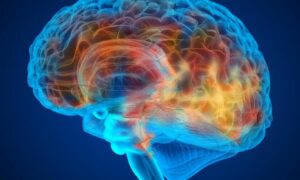
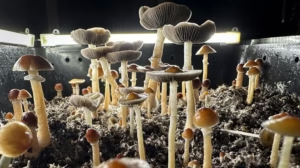
Psychedelic science is best understood as the intersection of multiple scientific disciplines rather than as a subject studied in isolation. Chemistry explains how molecules are constructed and classified. Botany investigates the plants that naturally produce biologically significant compounds, while mycology explores fungal diversity and metabolism. Neuroscience examines the organization of the nervous system and the communication networks that support perception, cognition, and learning. Pharmacology studies molecular interactions within biological systems, while molecular biology investigates genes, enzymes, proteins, and the biochemical processes responsible for life itself.
Other disciplines contribute equally valuable perspectives. Ecology explains how organisms interact within natural environments, genetics reveals evolutionary relationships between species, analytical chemistry provides highly precise methods for identifying molecular structures, and computational biology uses artificial intelligence and advanced mathematical models to analyze biological systems. Together, these interconnected sciences form the intellectual framework that defines contemporary psychedelic research.
How Modern Scientists Investigate Psychedelics
Scientific research follows carefully designed methodologies that emphasize accuracy, transparency, reproducibility, and critical evaluation. Before scientific findings become widely accepted, they undergo extensive laboratory investigation, statistical analysis, independent verification, and peer review by specialists working within the same field. This rigorous process ensures that conclusions are supported by measurable evidence rather than speculation or personal interpretation.
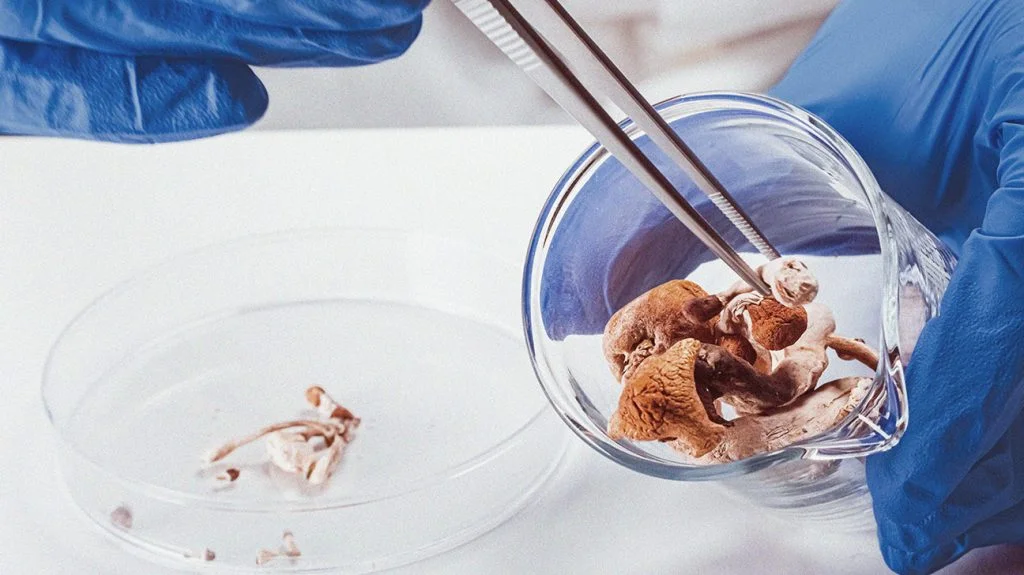
Today’s laboratories employ technologies that have transformed biological research. High resolution spectroscopy, Mass Spectrometry, High Performance Liquid Chromatography, genomic sequencing, metabolomics, Functional Magnetic Resonance Imaging, Positron Emission Tomography, artificial intelligence, and computational modeling allow researchers to investigate molecules, cells, genes, and neural networks with extraordinary precision. These technological advances continue expanding scientific understanding while enabling increasingly sophisticated investigations into chemistry, biology, and neuroscience.
Developing Scientific Thinking
Perhaps the most valuable lesson for beginners is recognizing that science is not simply a collection of established facts. It is an ongoing process of observation, experimentation, analysis, and continual refinement. Scientific understanding evolves as new evidence becomes available, and researchers remain willing to revise existing theories whenever stronger evidence emerges. This commitment to evidence based reasoning distinguishes science from opinion and allows knowledge to grow through careful investigation.
Developing scientific thinking also involves learning to evaluate sources critically. Peer reviewed journals, university publications, scientific organizations, and academic textbooks provide information that has undergone careful review by experts. By relying on credible sources and understanding the scientific method, readers can build a reliable foundation while avoiding misinformation and unsupported claims that often circulate outside the scientific community.
Your Journey Into Psychedelic Science Begins Here
Learning psychedelic science is not about mastering every discipline at once. It is about gradually building knowledge through accurate definitions, scientific classification, interdisciplinary understanding, and critical thinking. Every article, glossary, educational guide, and research overview contributes another layer of understanding, allowing readers to connect chemistry with biology, neuroscience with ecology, and history with modern scientific discovery.
This educational resource has been designed to serve as a comprehensive starting point for that journey. As you continue exploring the topics throughout this knowledge center, you will gain a deeper appreciation for the remarkable complexity of the natural world and the scientific methods used to investigate it. Whether your interest lies in botany, chemistry, neuroscience, molecular biology, anthropology, or environmental science, every discipline contributes to a richer understanding of psychedelic research and the extraordinary biological systems that continue to inspire scientific discovery around the world.