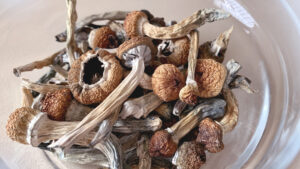
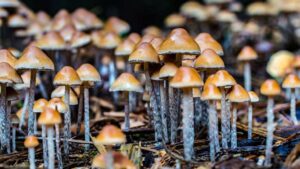
The story of psychedelics did not begin inside a research laboratory. It began thousands of years ago, when early civilizations learned to recognize the remarkable properties of certain plants, fungi, and naturally occurring compounds found within their environments. Across forests, mountains, deserts, and tropical regions, communities gradually accumulated generations of botanical knowledge through careful observation of the natural world. These discoveries became deeply woven into cultural traditions, ceremonial practices, artistic expression, and systems of knowledge that reflected an intimate relationship between people and their surrounding ecosystems.
Archaeological discoveries continue to provide evidence that psychoactive plants and fungi have accompanied human societies for millennia. Ancient rock art, ceremonial artifacts, preserved botanical remains, and historical records demonstrate that these organisms were not viewed merely as biological curiosities but as significant elements of cultural life. Although interpretations differ among historians, the historical record clearly illustrates humanity’s longstanding curiosity about naturally occurring compounds capable of influencing perception and conscious experience.
Indigenous Knowledge Across Continents
Long before chemistry became a scientific discipline, Indigenous societies had developed sophisticated systems for identifying, cultivating, and preserving knowledge about local plant and fungal species. Throughout the Americas, Africa, Asia, and Oceania, this knowledge formed part of broader ecological traditions that integrated medicine, agriculture, spirituality, and environmental stewardship. Rather than existing as isolated practices, these traditions reflected generations of accumulated observation passed from one generation to the next.
Modern anthropology increasingly recognizes that Indigenous knowledge represents an invaluable source of historical and ecological understanding. Contemporary researchers now work more closely with local communities to document traditional practices while emphasizing cultural respect, ethical collaboration, and the preservation of knowledge that has contributed significantly to today’s scientific understanding of ethnobotany.
When Chemistry Changed Everything
The nineteenth and twentieth centuries marked a turning point in the scientific study of psychoactive compounds. Improvements in analytical chemistry enabled researchers to isolate, identify, and characterize individual molecules that had previously been known only through the plants and fungi that produced them. This transition from botanical observation to molecular science fundamentally transformed the field, allowing investigators to examine chemical structure, biological activity, and pharmacological mechanisms with unprecedented precision.
As laboratory techniques became more sophisticated, scientists gained the ability to compare compounds originating from different organisms while identifying similarities in their interaction with the nervous system. These discoveries laid the foundation for modern pharmacology and created entirely new opportunities for investigating how naturally occurring molecules influence brain function.
The Rise of Modern Neuroscience
During the second half of the twentieth century, neuroscience emerged as one of the fastest-growing scientific disciplines, providing researchers with new tools for investigating the human brain. Rather than relying solely on behavioral observation, scientists could now study neurotransmitters, receptors, neural pathways, and electrical activity at extraordinary levels of detail. This technological revolution transformed psychedelic research from a largely descriptive field into one supported by measurable biological evidence.
The introduction of advanced imaging techniques further accelerated scientific progress. Researchers began observing changes in brain connectivity, neural communication, and information processing during carefully controlled investigations, producing valuable insights into cognition, perception, and the biological foundations of conscious awareness. These innovations continue to shape modern understanding of brain function.
A New Era of Scientific Collaboration
Today’s psychedelic research reflects an unprecedented level of international cooperation. Neuroscientists, chemists, psychiatrists, psychologists, botanists, pharmacologists, and computational biologists routinely collaborate across institutions and disciplines to investigate complex scientific questions that no single field could answer alone. This collaborative approach has strengthened research quality while encouraging greater transparency, methodological consistency, and independent verification of scientific findings.
The expansion of interdisciplinary research has also encouraged stronger connections between laboratory science and the humanities. Historians, anthropologists, ethicists, and conservation scientists now contribute alongside biomedical researchers, creating a more comprehensive understanding of psychedelic compounds that acknowledges both scientific evidence and cultural history.
Looking Back to Move Forward
The history of psychedelics is ultimately a story of human curiosity. From ancient communities that carefully documented the natural world to modern laboratories equipped with advanced imaging technologies, each generation has added new knowledge to an expanding body of scientific and cultural understanding. Every historical milestone has contributed to the questions researchers continue to explore today, linking archaeology, botany, chemistry, neuroscience, and anthropology into a single, evolving narrative.
Rather than representing separate chapters, the past and present remain closely connected. The traditions preserved by early societies continue to inform modern research, while contemporary scientific discoveries provide new perspectives on historical knowledge. Together, they illustrate how the study of psychedelics has evolved from ancient observation into one of the most multidisciplinary fields in contemporary science.